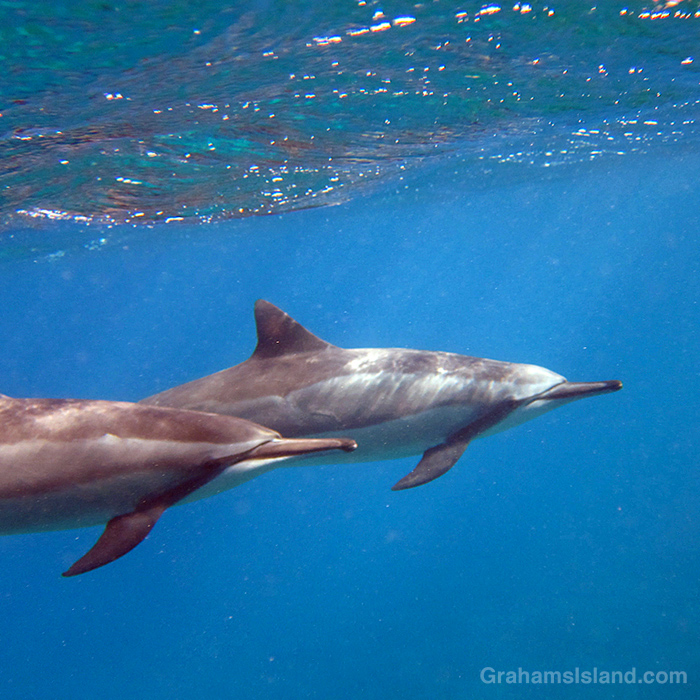
A pod of spinner dolphins stopped by my local snorkeling spot. (Link, link)
Lāhainā Noon, when shadows disappear in Hawaii. (Link)
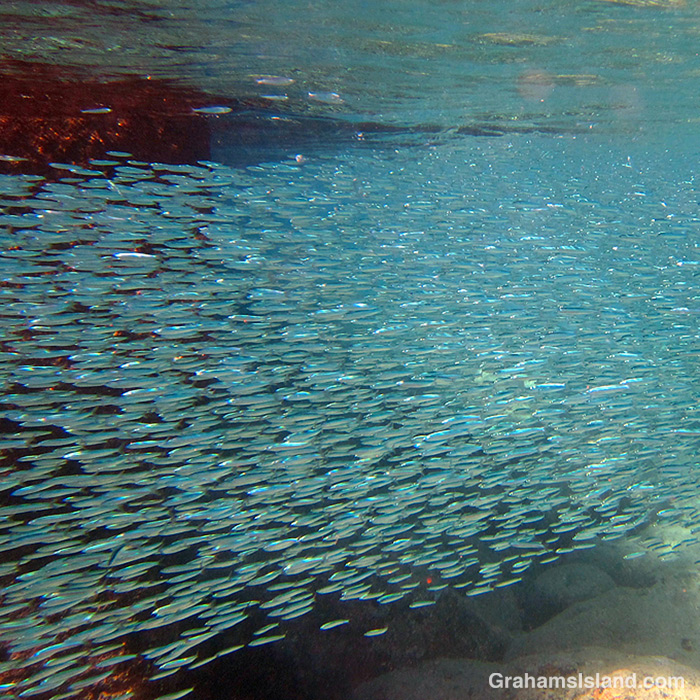
Shoals of Hawaiian silversides were abundant in the summer. (Link)
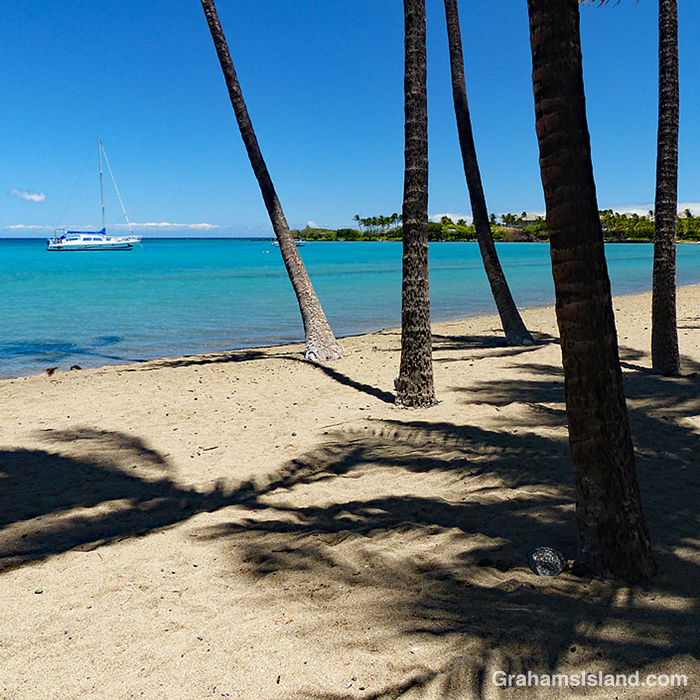
With no tourists here, Anaeho’omalu Bay was a sea of tranquility. (Link)
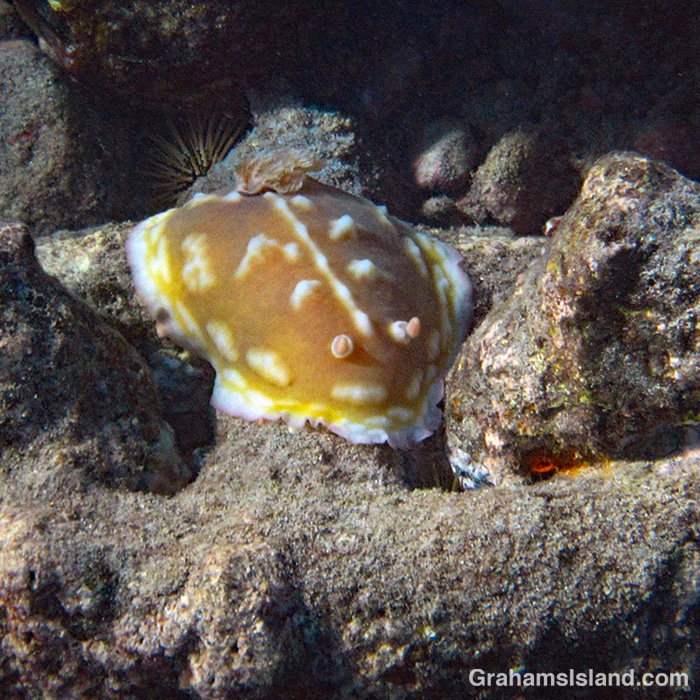
Some clumpy nudibranchs spent a few weeks in a local bay. (Link)
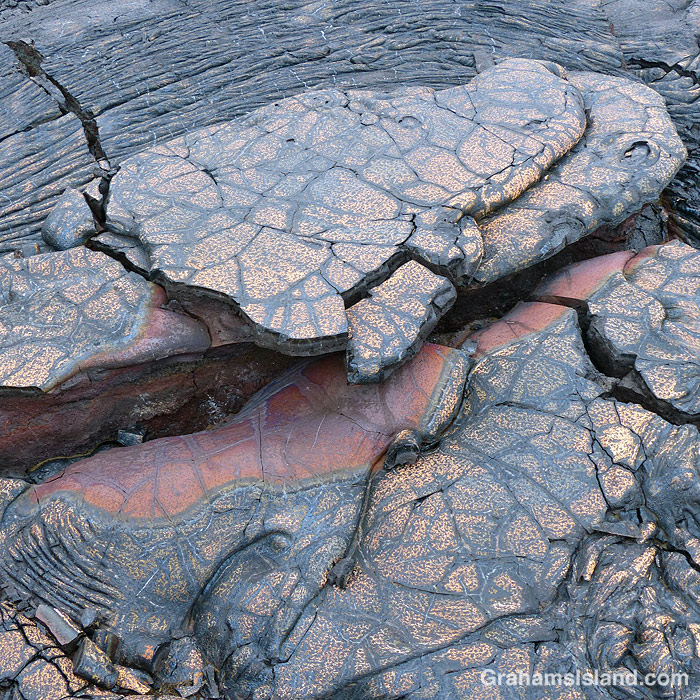
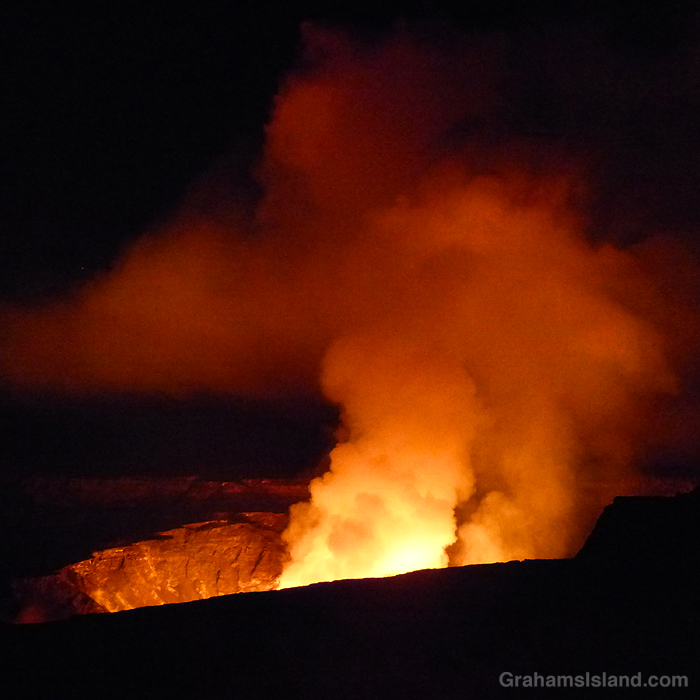
The year ended with a bang when Kilauea Volcano erupted again. (Link)
This week’s Sunday Stills challenge theme is ‘Your 2020 Retrospective.’ See more responses here. Also posted in response to Becky’s January Squares challenge theme of ‘Up.’ See more responses here.
In this retrospective I’ve focused on events and photos that were uplifting for me during the difficult year that was. Most of these photos haven’t run before, but were taken at the same time as those in posts that ran in 2020. Links to the original posts are at the end of the captions.
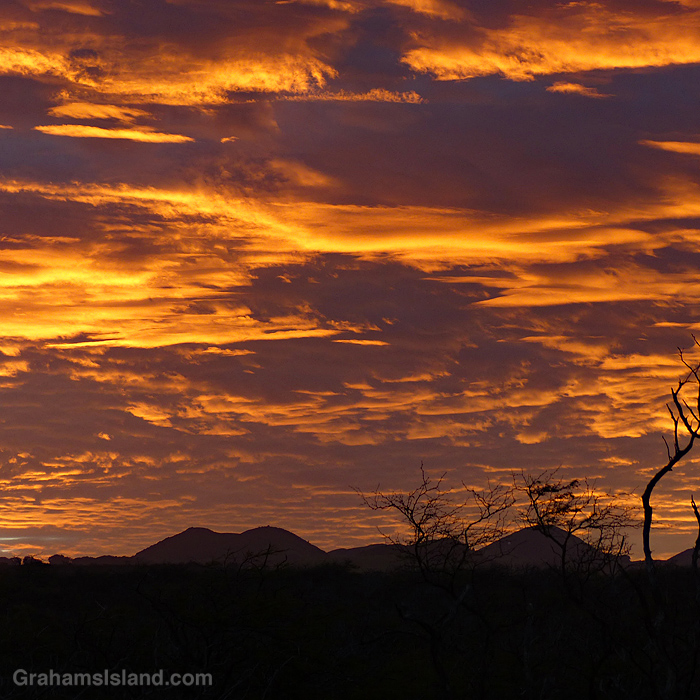
As the sun sets on this strange, unhappy year, here’s a photo of a more tranquil sunset. The long, low island on the left is Kahoʻolawe, with Lānaʻi visible just to the right of it. The southern coast of Maui is on the right.
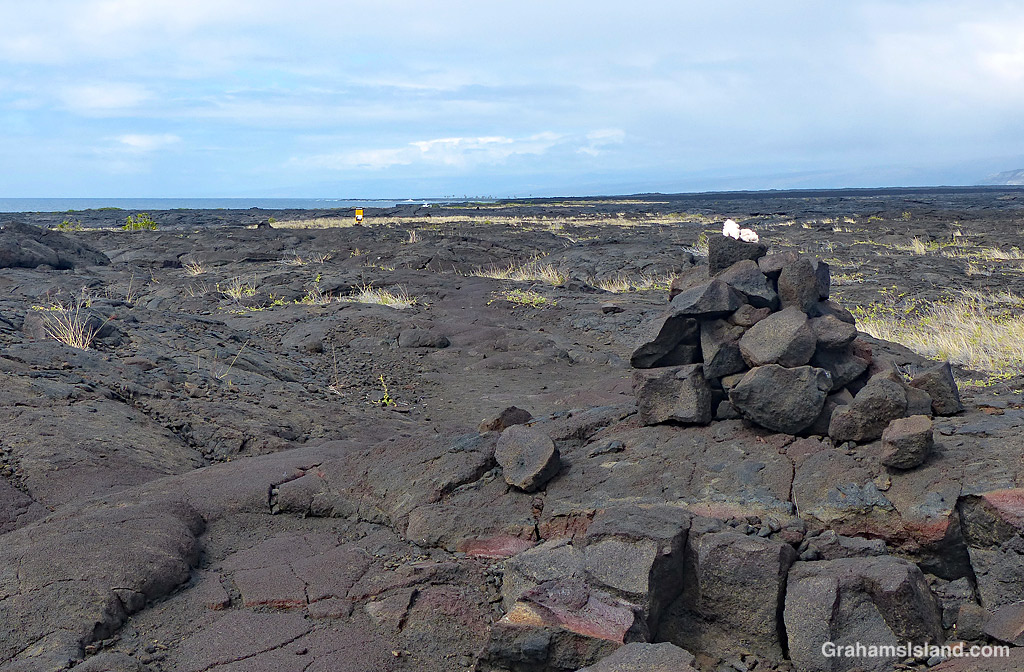
The coastal regions of Hawaii are dotted with tsunami warning signs. Basically, any place within reach of a tsunami gets a sign.
I came across this sign while hiking the Puna Coast Trail in Hawaii Volcanoes National Park. It stood out as a dot of color in a field of lava and scrubby grasses. What I liked about the sign was its sage advice ‘In case of earthquake, immediately go to high ground or inland.’ At this spot, the high ground is inland, so that kills two birds with one stone.
On the other hand, getting to that high ground inland involves scrambling over a mile or more of rough lava. Also, if the earthquake was big enough, it might just mean that you could encounter lava from a new eruption heading down to the coast to meet you. The sign doesn’t offer any advice on what to do then!
For more information about Hawaii Volcanoes National Park, go to nps.gov/havo/.
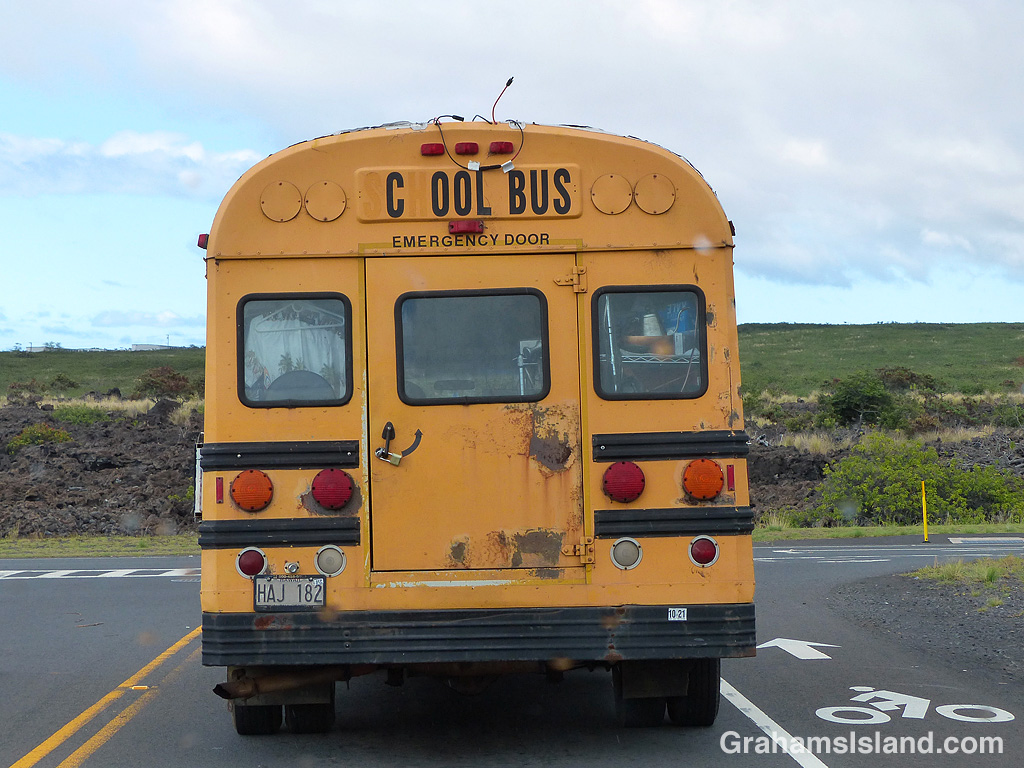
I wasn’t paying too much attention to this vehicle as I drove behind it in Kailua Kona. It had typical school bus shape, colors, and lettering, a bit rougher looking than most perhaps, but then some are. But it finally dawned on me that the lettering wasn’t in poor shape; it was deliberate. That’s when I looked closer and saw what was in the back windows.
A converted school bus, someone’s RV or mobile home, and not that cool to be honest.
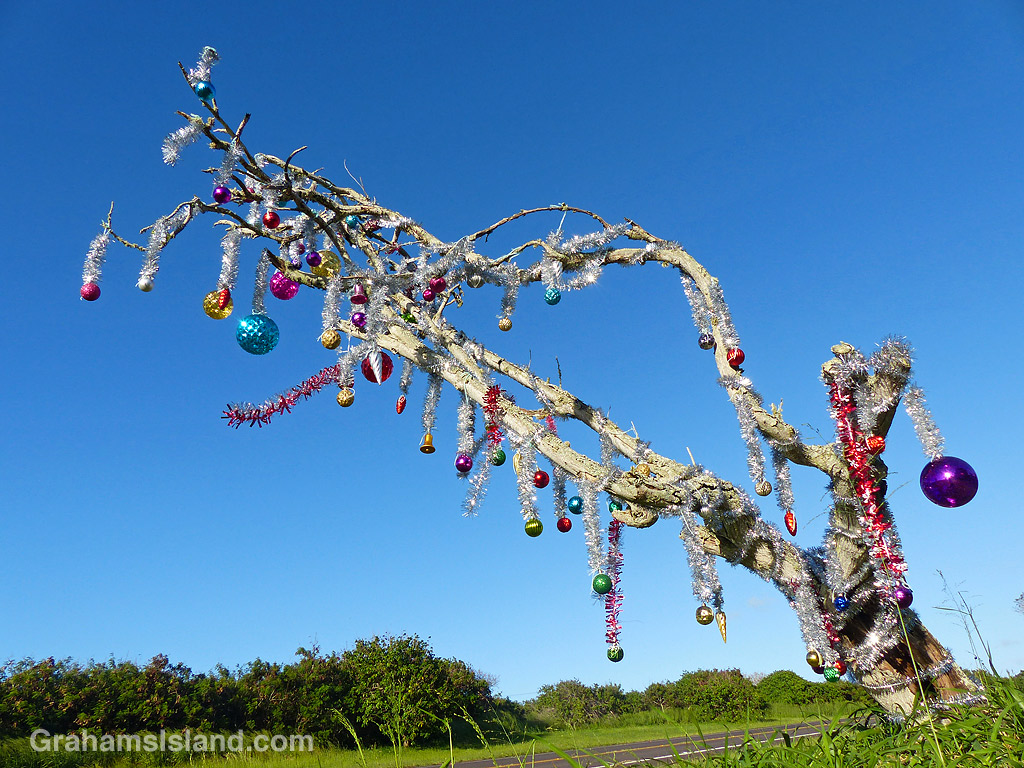
A week or so ago, I saw a small group of people decorating this dead tree alongside the main highway a couple of miles shy of Hawi. Lavished with tinsel and ornaments, it might be this tree’s last hurrah in the world, but what a way to go!
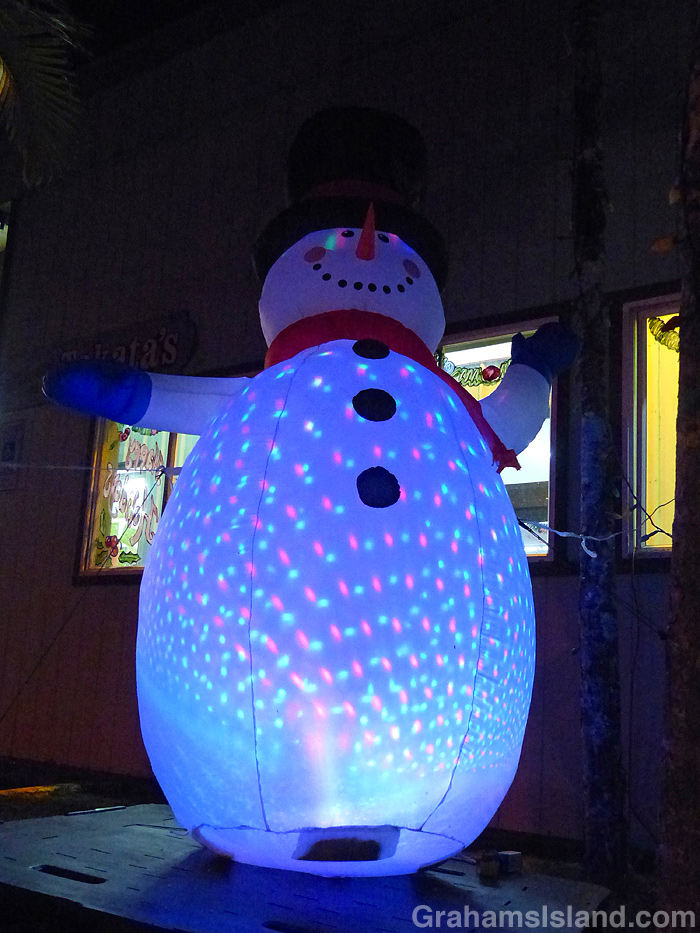
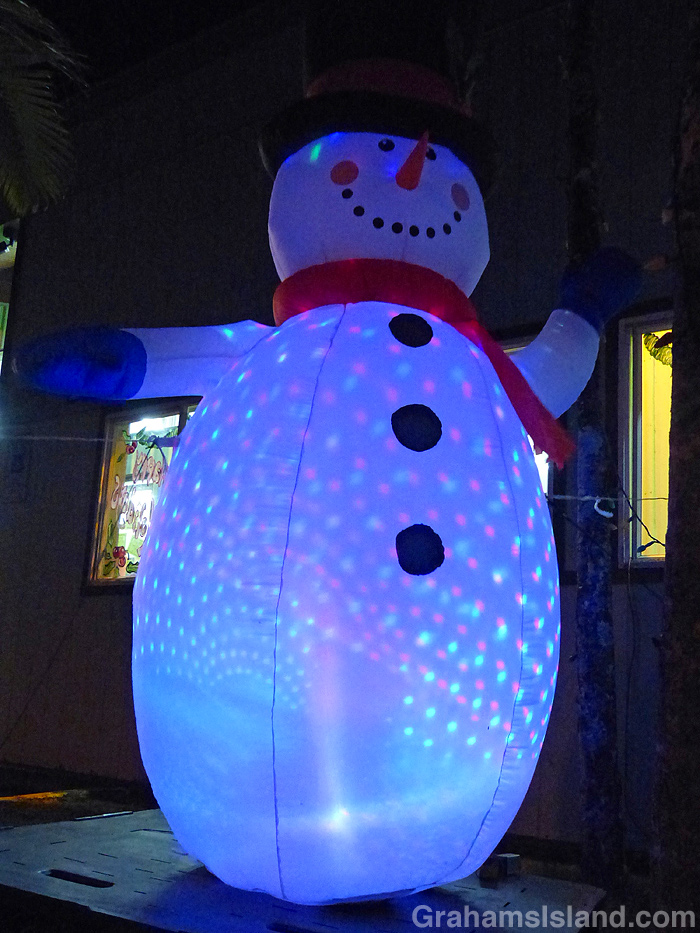
This is the Christmas display outside the local grocery store. I’m a little bit in two minds as to whether this display is cheery or terrifying. It’s meant to be seen at night so that’s not the issue. Perhaps it’s the way the wind was blowing the snowman back and forth, back and forth.
I woke up on Monday morning to the news that Kilauea Volcano had erupted again. Three vents had opened in Halemaʻumaʻu crater at the summit of the volcano. After the first flurry of activity, the eruption settled down to two of the vents pouring lava into the crater, evaporating a water lake that had formed since the 2018 eruption, and creating a new lava lake at a healthy rate.
This obviously called for action on my part in the form of going down and taking a look. Despite the paucity of tourists on the island, early reports warned that viewing areas were becoming crowded with long waits for parking spaces. But where many people prefer to visit in the late afternoon and wait for it to get dark, I like arriving in the wee hours of darkness and waiting for dawn.
Consequently, yesterday morning I got up at 12:45 a.m. (after a relaxing 3 hours of sleep) and left the house at 1:15 a.m.. The benefit of driving at that hour is that, while the sky is dark, traffic is light. In this instance a second benefit was a wonderful starlit drive, though I couldn’t fully appreciate it since I felt a certain obligation to keep my eyes on the road. Driving over Saddle Road though, I did notice a red glow off to my right, a sure sign of volcanic activity at Kilauea.
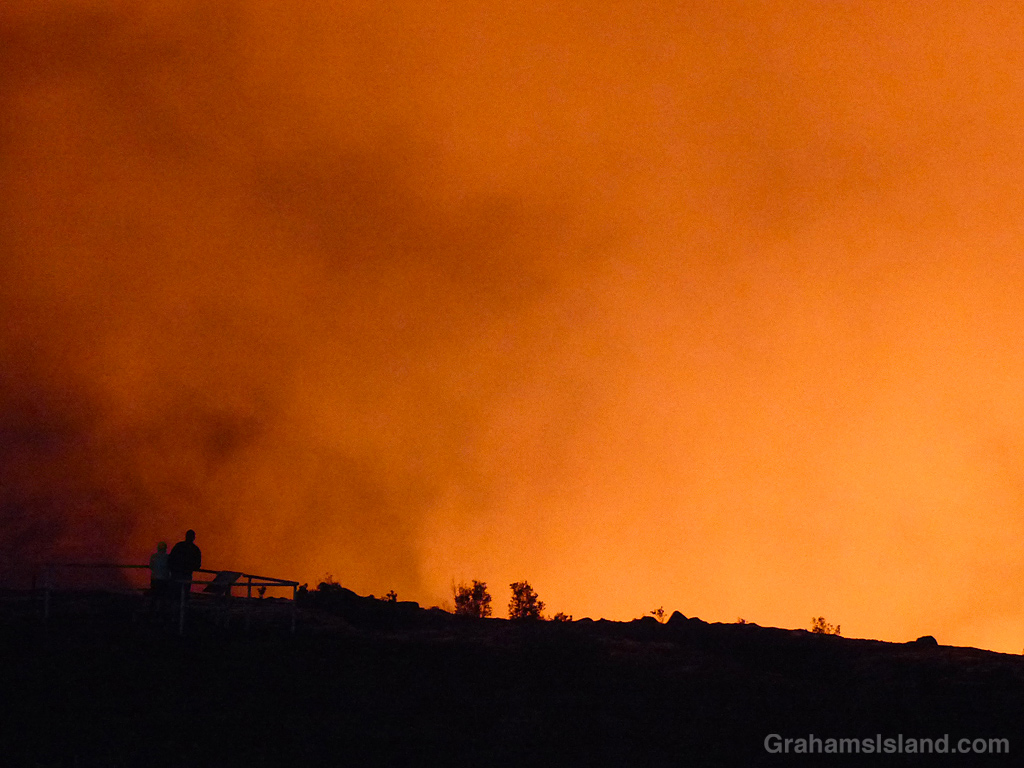
I got to the park at 3:45 a.m. and headed for the Kilauea Overlook, the prime viewing area. Parking was easy to come by and the crowds weren’t too heavy. While the vents couldn’t be seen from there (or any of the viewing areas) the sky billowed with orange and red clouds of steam and smoke. The second photo was taken there and I like how the glow illuminates the rock face of the crater.
I drove back to the overlook at the Steaming Bluff. This was farther from the eruption site, but virtually deserted. The top photo was taken there. I wanted to capture the eruption and the starry night, which I couldn’t do at Kilauea Overlook because the eruption dominated everything.
After a short stay there, I moved on to the Keanakākoʻi Overlook at the southeastern corner of the Kilauea summit caldera. This viewing site required a hike in of about a mile on the old Crater Rim Drive, long since closed to vehicles because of damage from previous eruptions. The third photo shows people at the overlook watching the activity. I left there as it started to get light.
So was it worth the early start and long day? Absolutely! The views weren’t as compelling as those from Jaggar Museum, now closed and erased from the online maps, but there aren’t many places on earth where a person can drive to the rim of an active volcano and watch an eruption with any degree of safety. At Kilauea, this is possible, so I take every opportunity to do so because each episode of volcanic activity is different and there’s no telling what I might see.
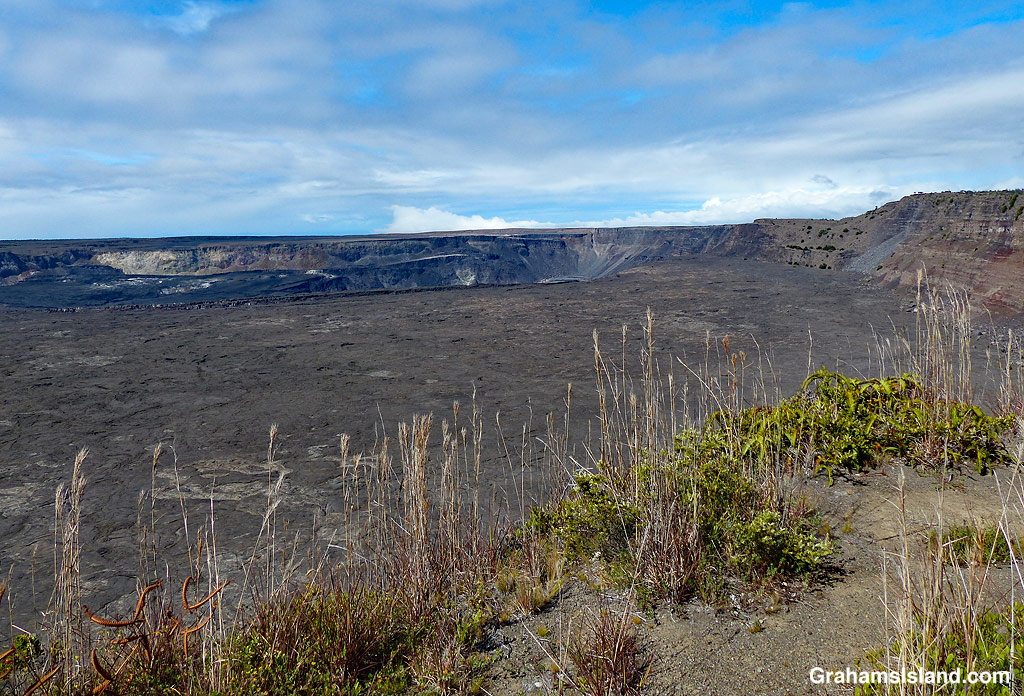
And the bottom photo? That was taken in June when I went hiking in the park. It was taken from the rim of Halemaʻumaʻu crater somewhere between where the top and second photos were taken. They’re a little different!