I was watching a pair of Gray Francolins and their four chicks when something spooked them. The parents ran away. The chicks, still too small to cover ground quickly, dived for cover. Three disappeared into a clump of grass, but the fourth ended up under the overhang of a large rock. That’s the one in this photo.
Like any young bird, it instinctively knew to find cover, remain still, and make no noise. I watched it for a while and the only movement it made during that time was, if I moved, it briefly opened its eyes. I think of all newborns and youngsters as a species renewing itself and moving forward.
Posted for Becky’s Squares: Move Forward, Reconstruct, Renew, and/or are Burgeoning. See more responses here.
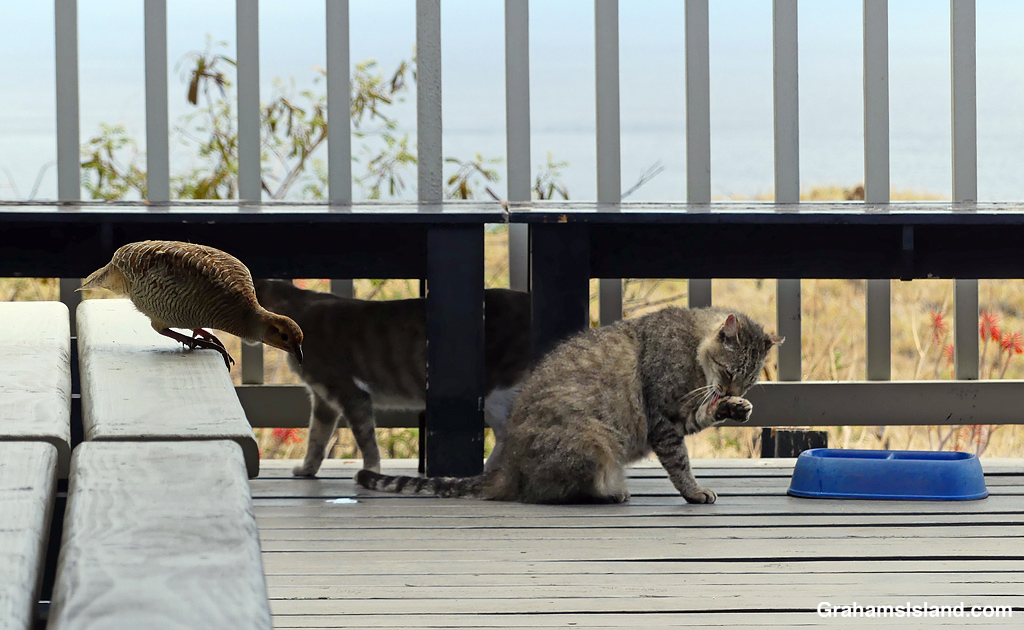
A Gray Francolin ventures into the territory of some cats.
The idea of The Numbers Game is to enter a number into the search bar of your computer and then post a selection of the photos that turn up. This week’s number is 128. You can see more responses here.
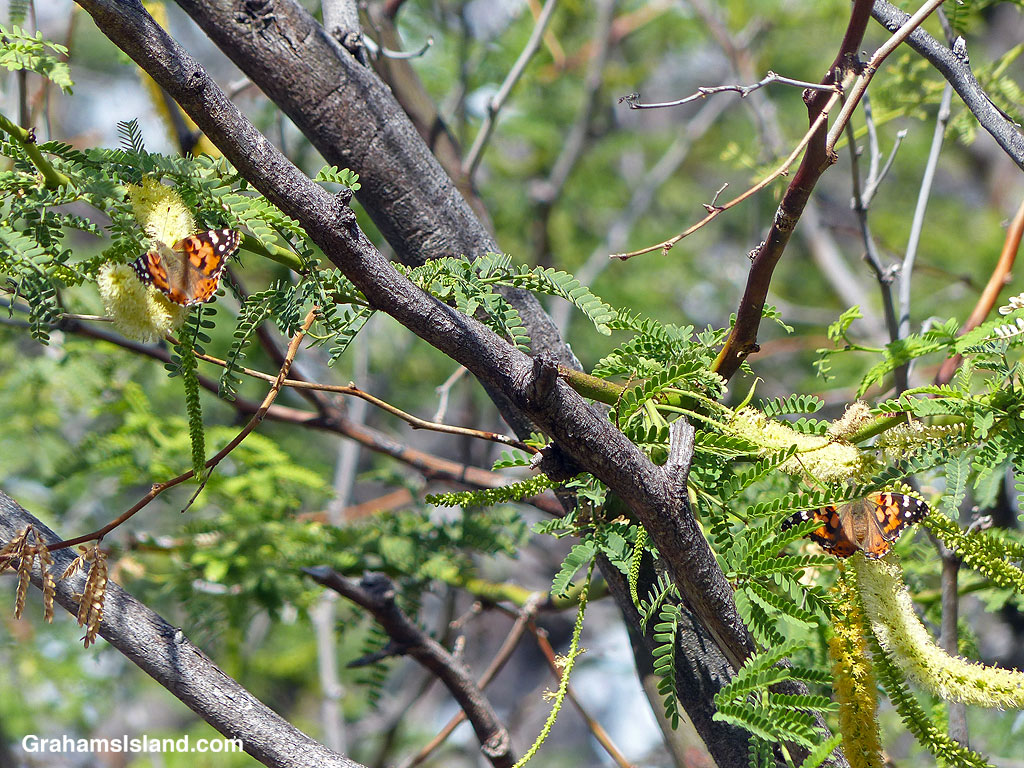
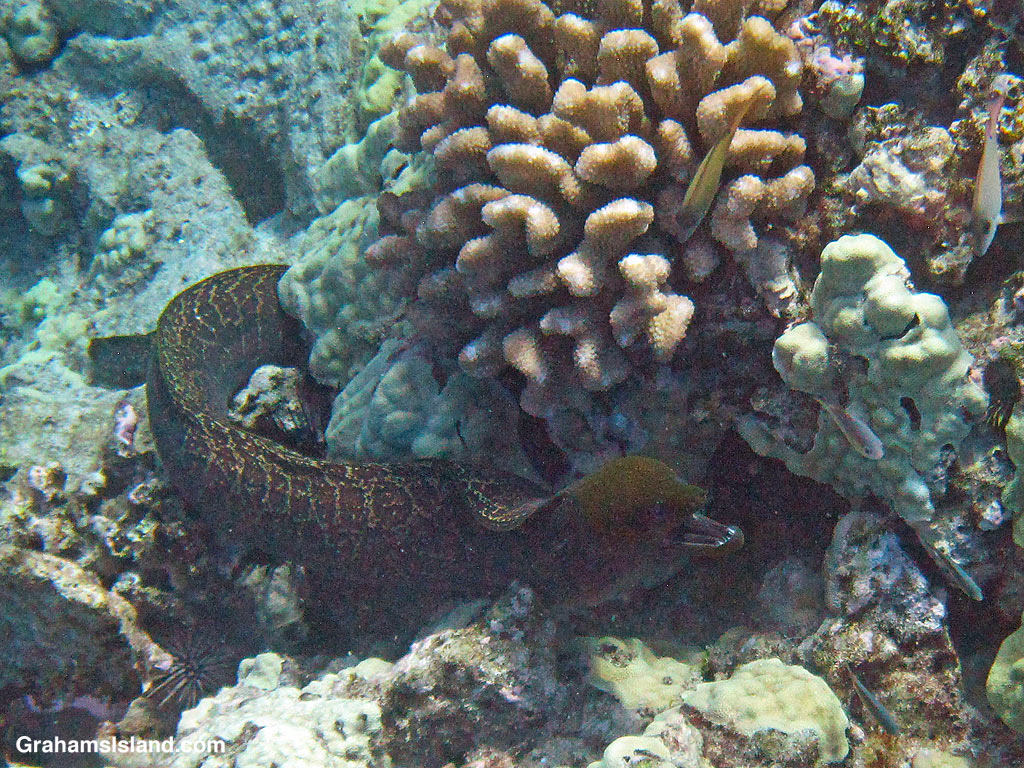
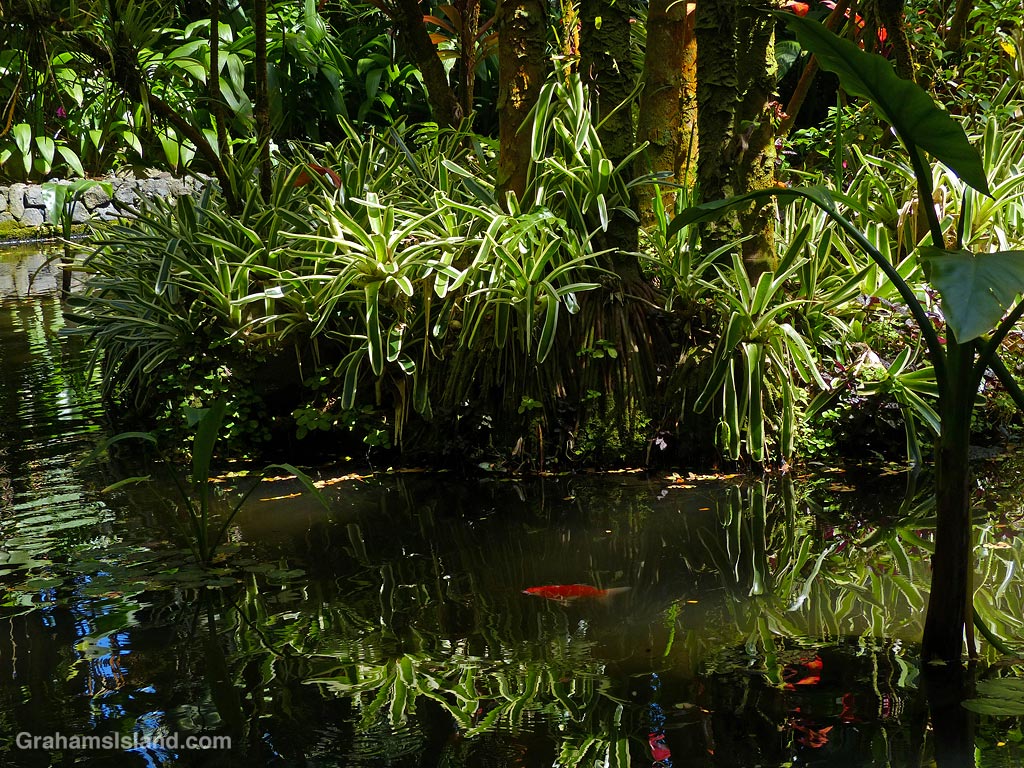
Two Painted Lady Butterflies in a Kiawe tree.An Undulated Moray Eel looking grouchy, as per usual.Koi swim in Lily Lake at Hawaii Tropical Bioreserve and Garden.
Sunday Stills challenge theme this week and last week is ‘Your 2023 Year-in-Review.’ See more responses here. As before, I’m going with a favorite photo from each month of 2023, with a caption and link to the post the photo first appeared in. Last week, I posted favorites from January through June. This week, it’s July through December.
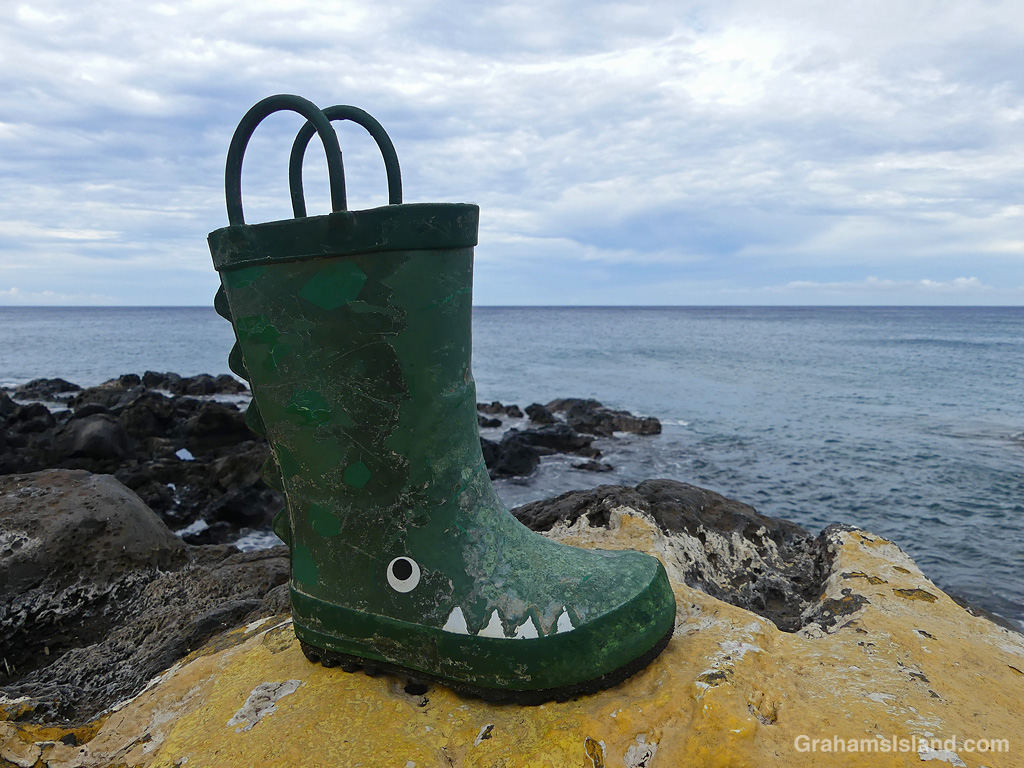
September: Mr. Chompers on the move (link).October: Wood you believe it (link)?November: Mauna Kea around sunrise (link).December: The boot’s not on the other foot (link).
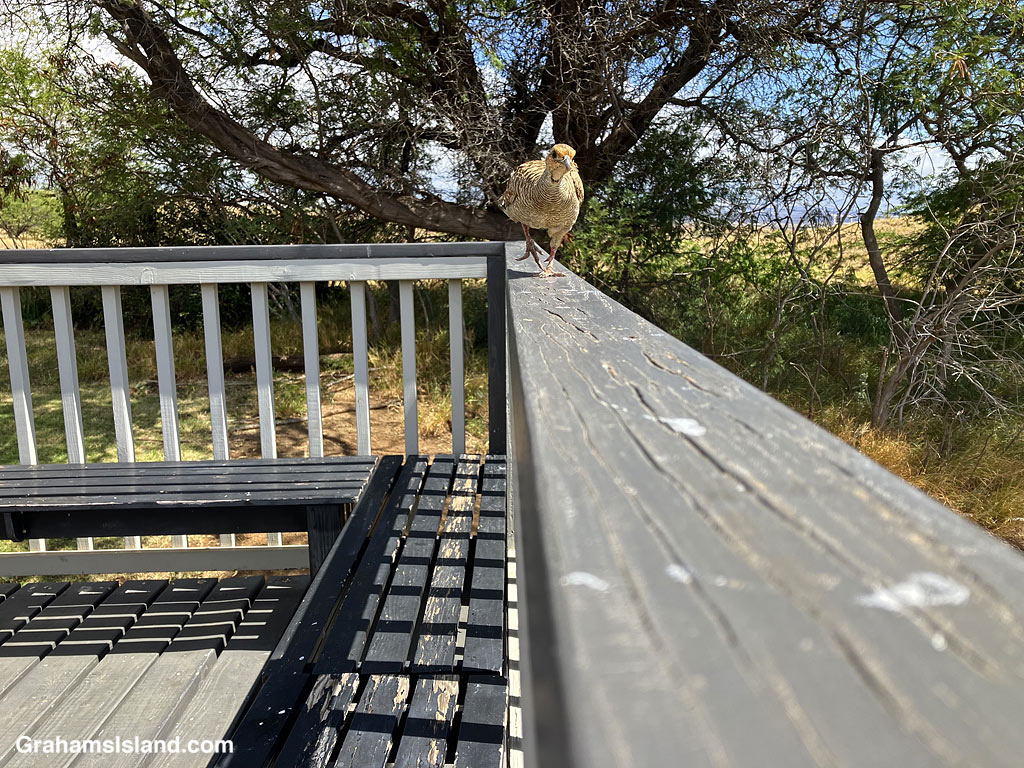
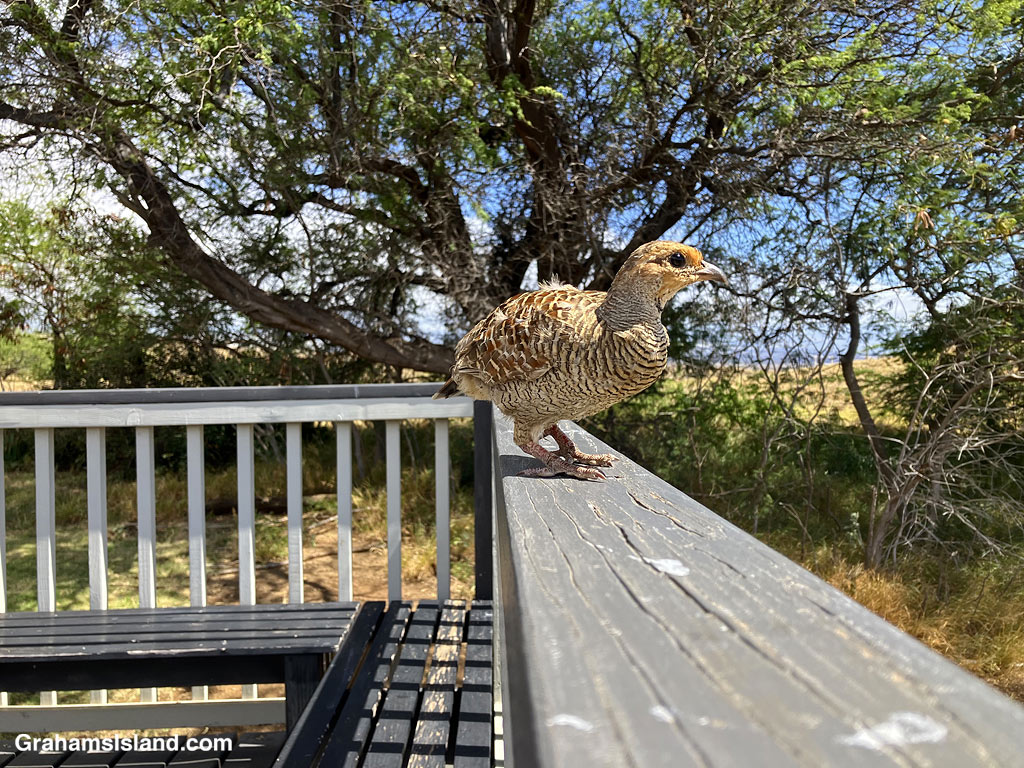
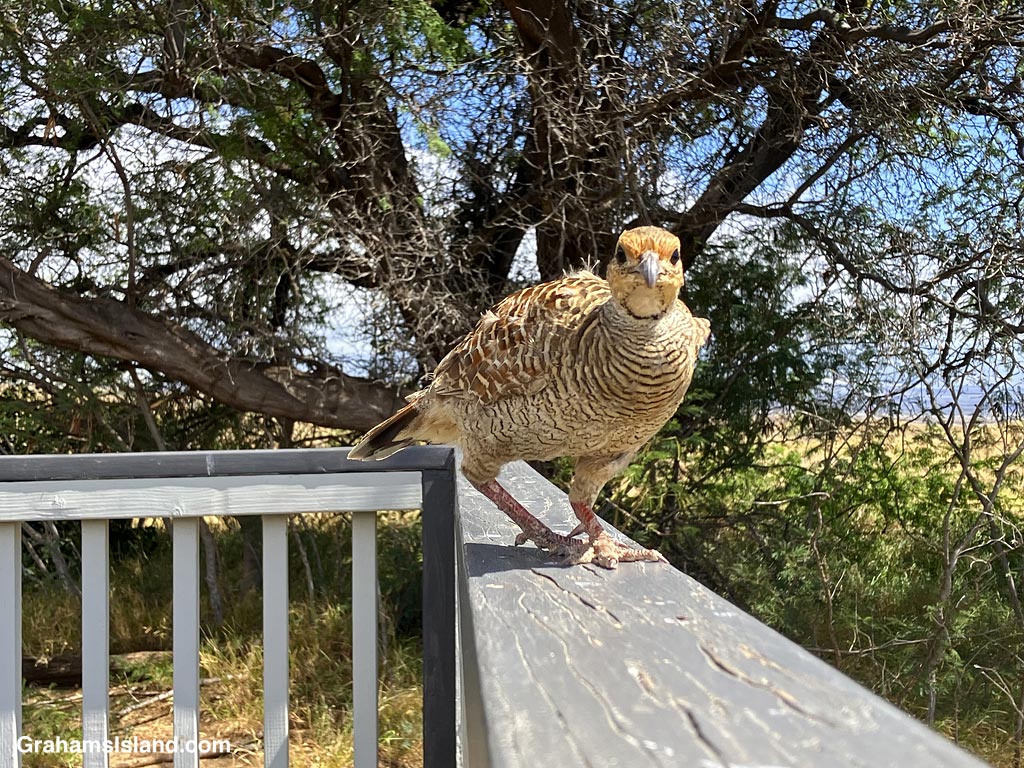
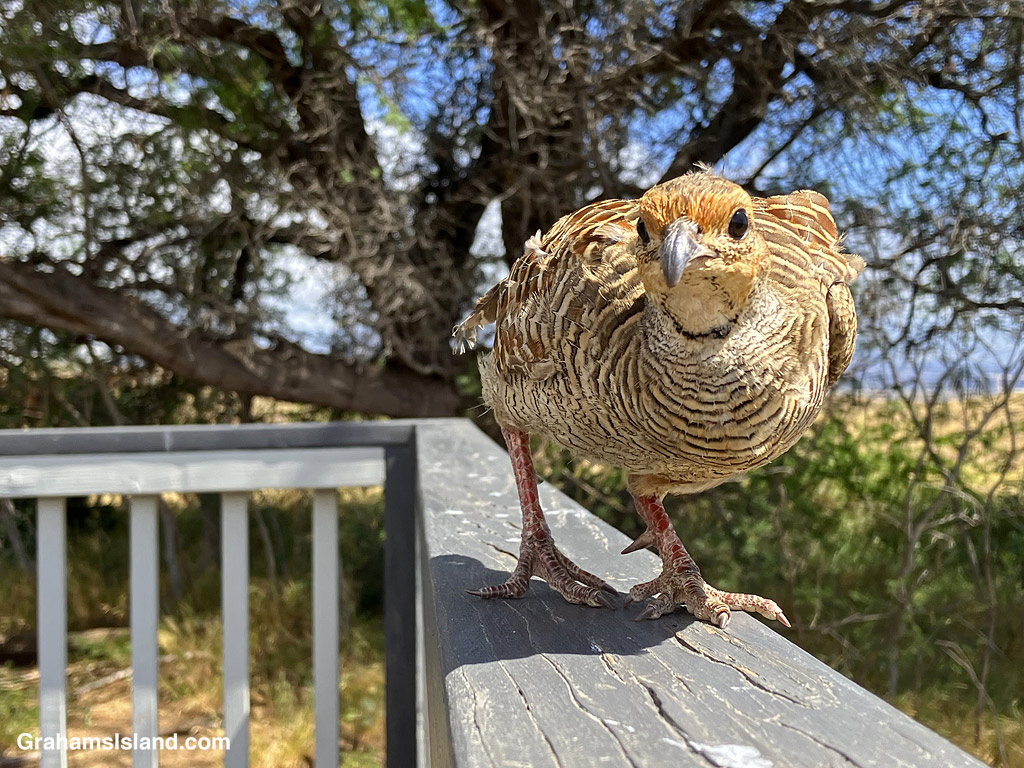
At work, we have six cats which get fed twice a day. After the cats have eaten, and sometimes while they’re eating, birds swoop in. The cats’ numbers are stable, but the number of birds at the feast keeps increasing. Some days it’s like a scene out of Hitchcock’s ‘The Birds.’
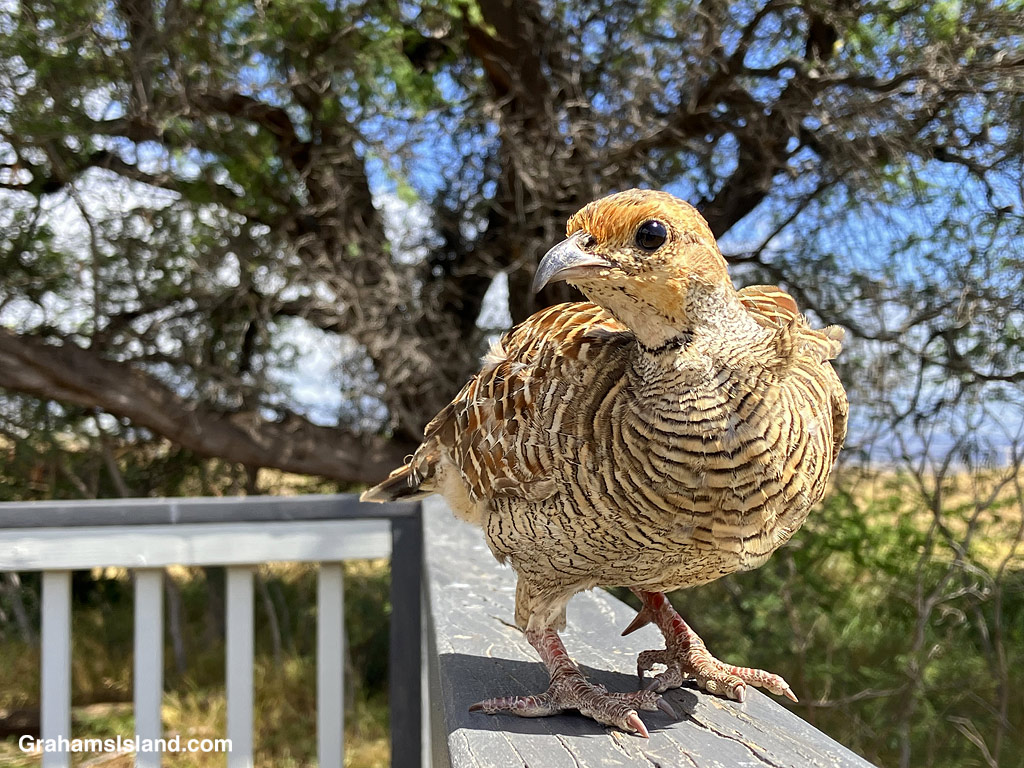
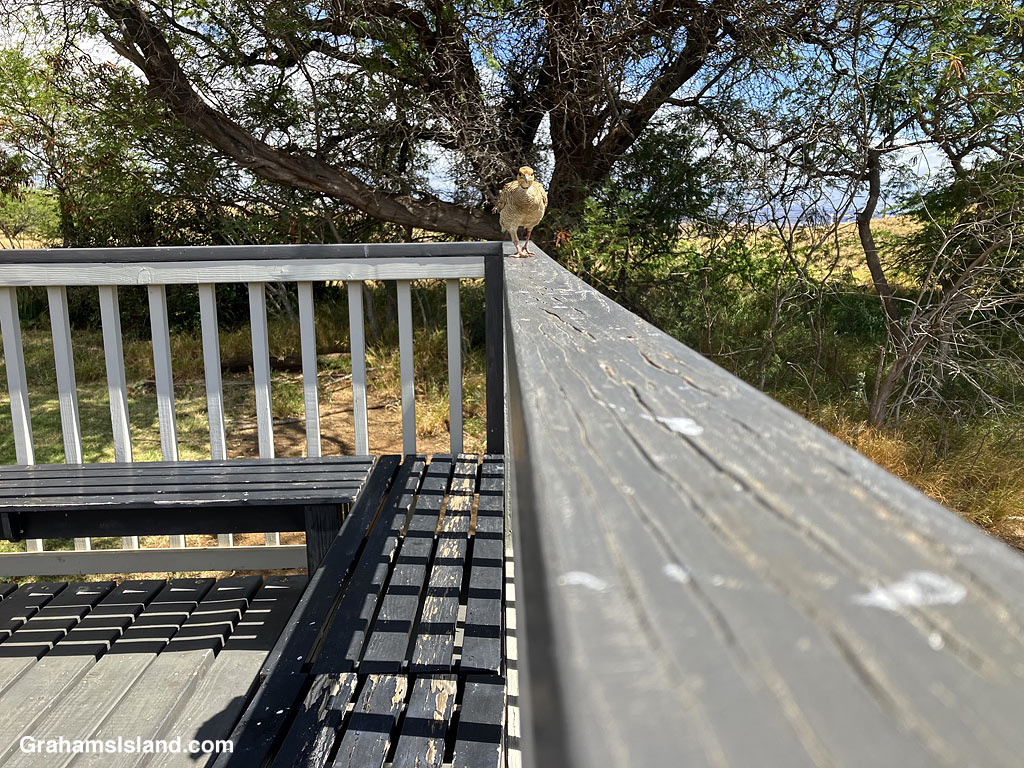
The Gray Francolins, including this one, are particularly bold. When I saw it on the rail one day, I wondered if it would come seeking a handout. I wasn’t disappointed. It was a little uncertain, but couldn’t resist the prospect of an extra snack. I just stood and waited and got these photos on my phone.
I hoped it would come right up to the lens so I’d end with a photo of a beak and maybe an eyeball! It did get pretty close, but with no food appearing to lure it on, it finally stopped and then flew off.
I saw this Erckel’s Francolin walking up an angled tree trunk on the side of Mauna Kea. It got to the spot in the top photo, had a look around, and then walked back down again. Francolins prefer to walk everywhere because, being game birds, they know that when they take wing, people try and shoot them.
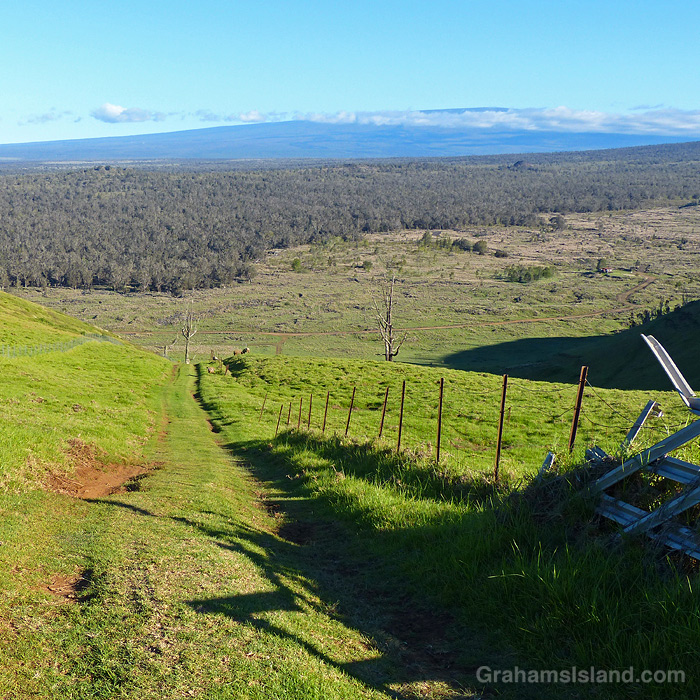
Pu’u Wa’a Wa’a is a cinder cone on the slopes of Hualalai volcano. The name means “many-furrowed hill,” and it’s a place I like to walk at least once a year, but it had been a while since I was up there. Usually, I go there in the spring when Jacarandas and other flowers are blooming. I also try to go in the early morning, since the area tends to cloud up during the day and the wonderful views become obscured.
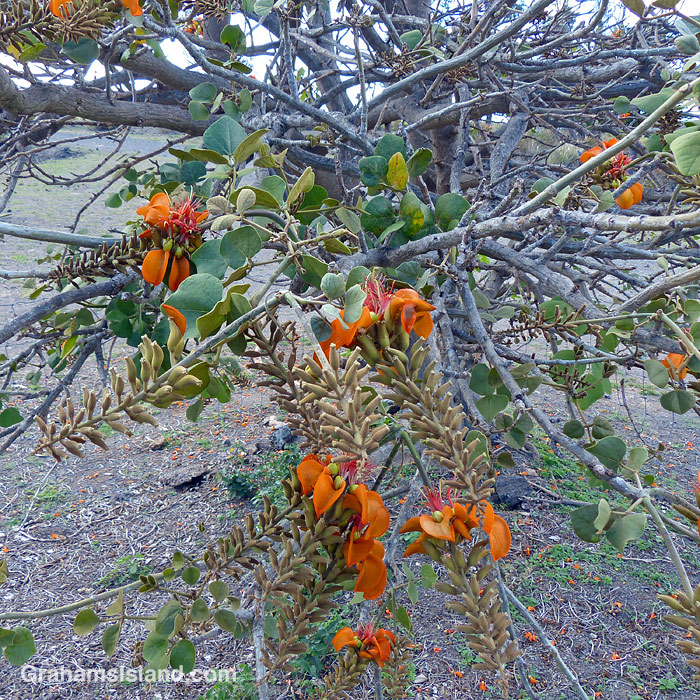
A couple of weeks ago I made a late decision to do the hike again since the weather looked unusually good. I got there around 2pm and it will come as no surprise that I spent the first 15 minutes of the hike taking photos of Williwilli flowers on a tree about 20 feet from where I parked! (More of those in a few days.)
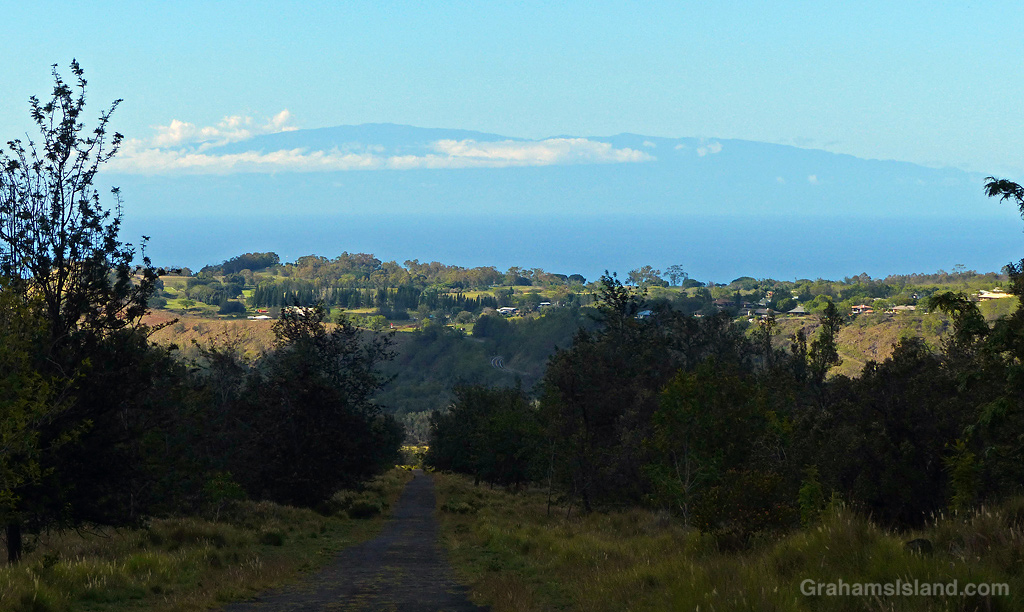
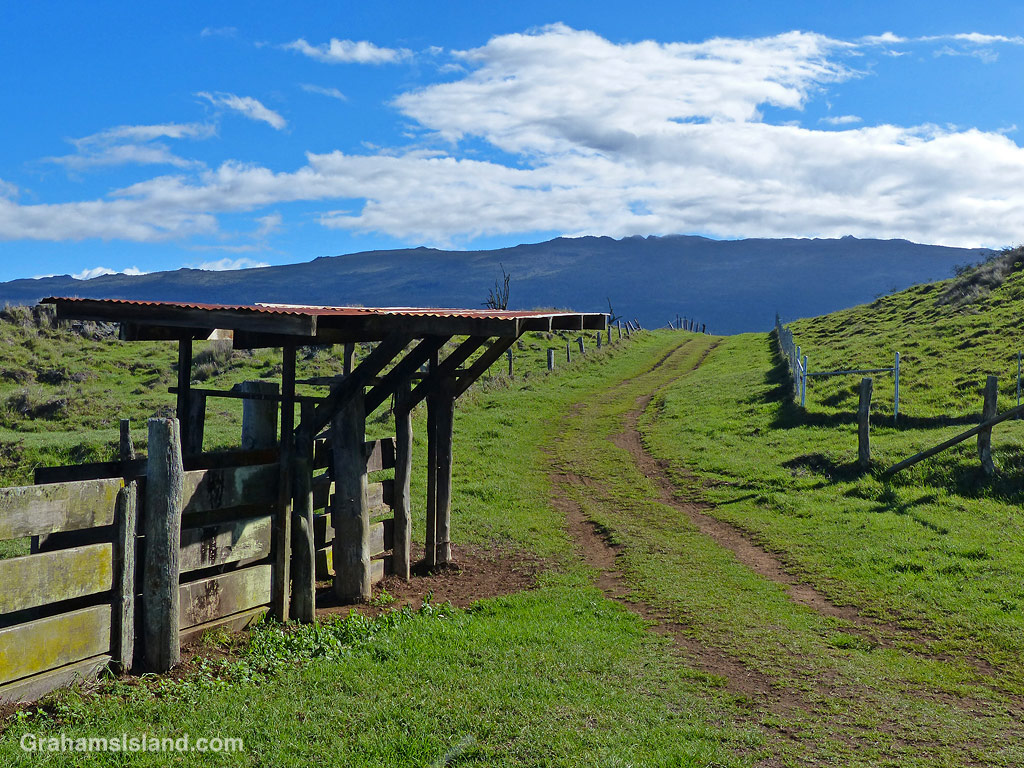
The trail follows an old road up the hill past Silk Oak trees, at the tail end of their flowering and sporting a deep red hue I hadn’t seen before. Turn around, and there are good views of Maui to be had. The old road peters out near an old blockhouse, now lacking doors and windows, which offers shelter to livestock on the ranch here. Off to one side is an old quarry, which cuts into the side of the hill. Usually there are goats in this area, but I didn’t see any on this day. Farther up is what’s left of Tamaki Corral, which dates back around 100 years.
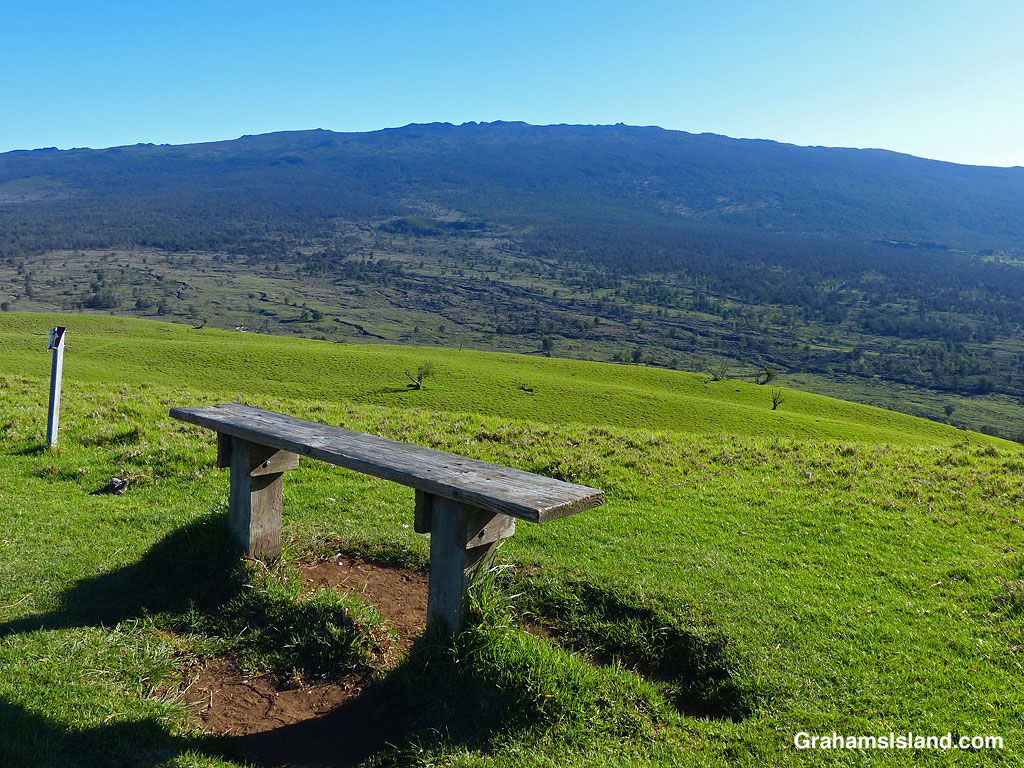
Not far after the corral, the trail climbs steeply toward the top. This was where I found a change in the trail. Whereas before the trail was an out-and-back up a steep slope to the top, now a loop has been created. I took this new option to the top where, on this remarkably clear late afternoon, I had great views of Maui, Kohala Mountain, Mauna Kea, Mauna Loa, and Hualalai. A new sign at the top welcomes hikers to the nearly 4,000 foot summit, and there’s a survey marker at the top riddled with holes, not from gunfire, but to let the wind blow through. There are also a couple of benches where one can sit a while enjoying the views (weather permitting). The hike is steep in places, but not difficult, though not everyone makes it back alive!
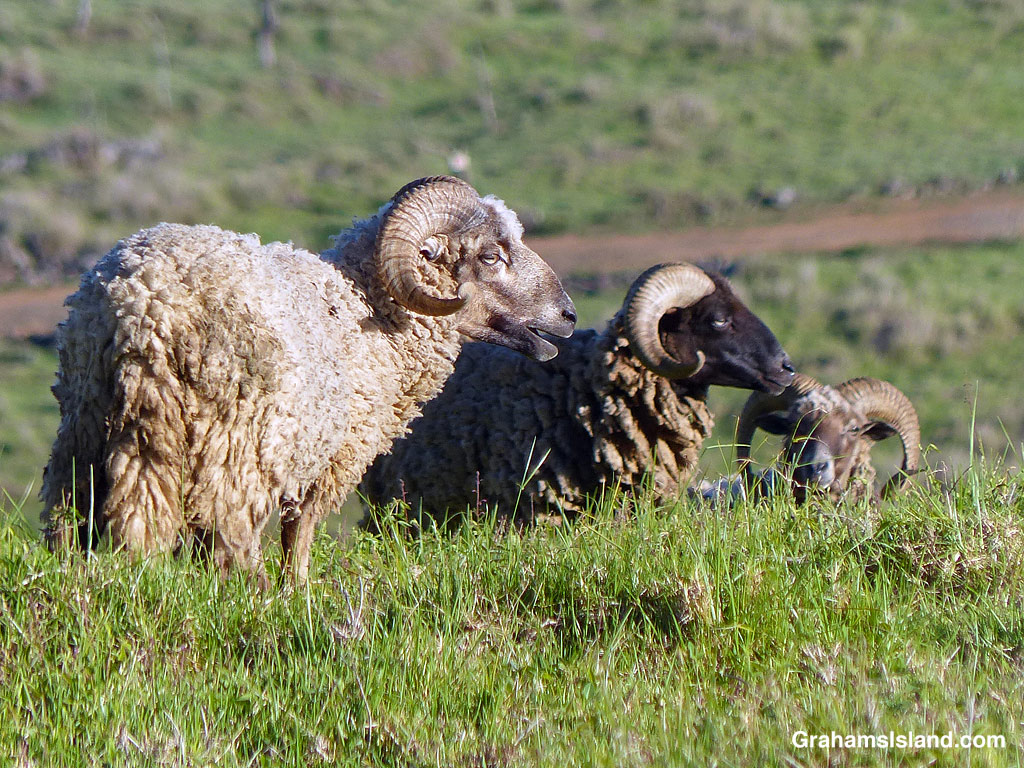
I followed the old trail back down and ran into several sheep, which have the run of the land up here, as the sun dipped behind the ridge.
One other difference I noticed with this afternoon hike was the proliferation of birds. There were large numbers of finches, mostly Saffron Finches flitting about, preparing to roost for the evening. Yellow-fronted Canaries were all over the tree tobacco flowers. I also saw, and heard, several Erckel’s Francolins doing their usual fine job of blending in with the vegetation.
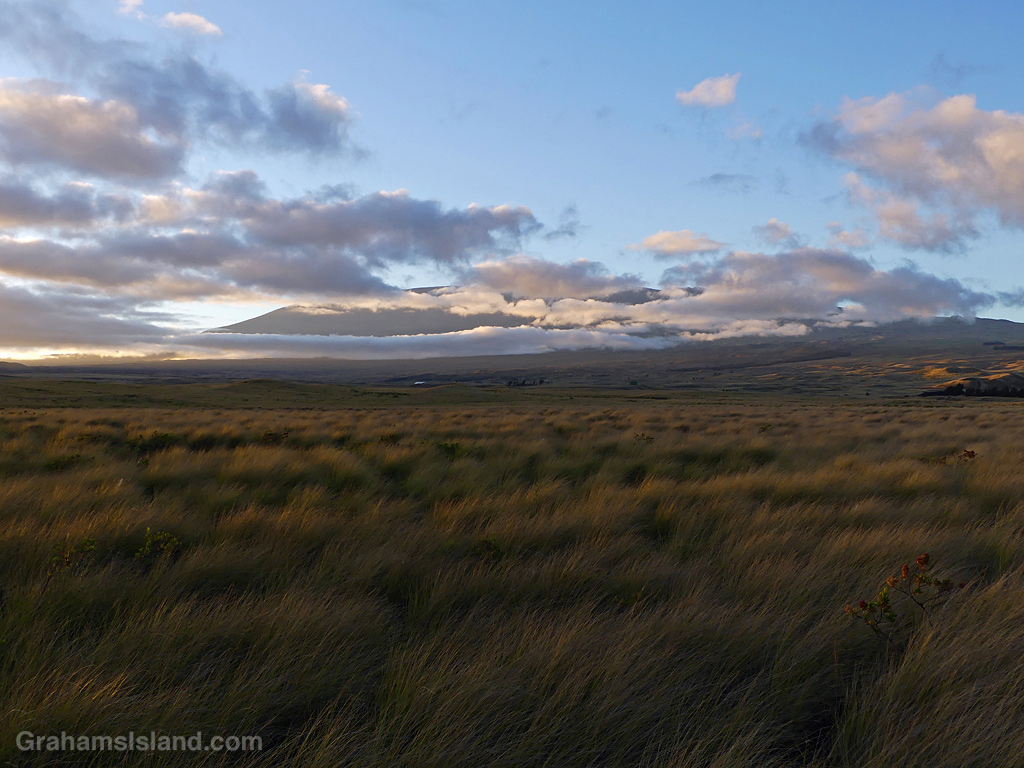
And as I walked back down the hill towards my car, the late afternoon sun still shone, illuminating grasses alongside the trail.
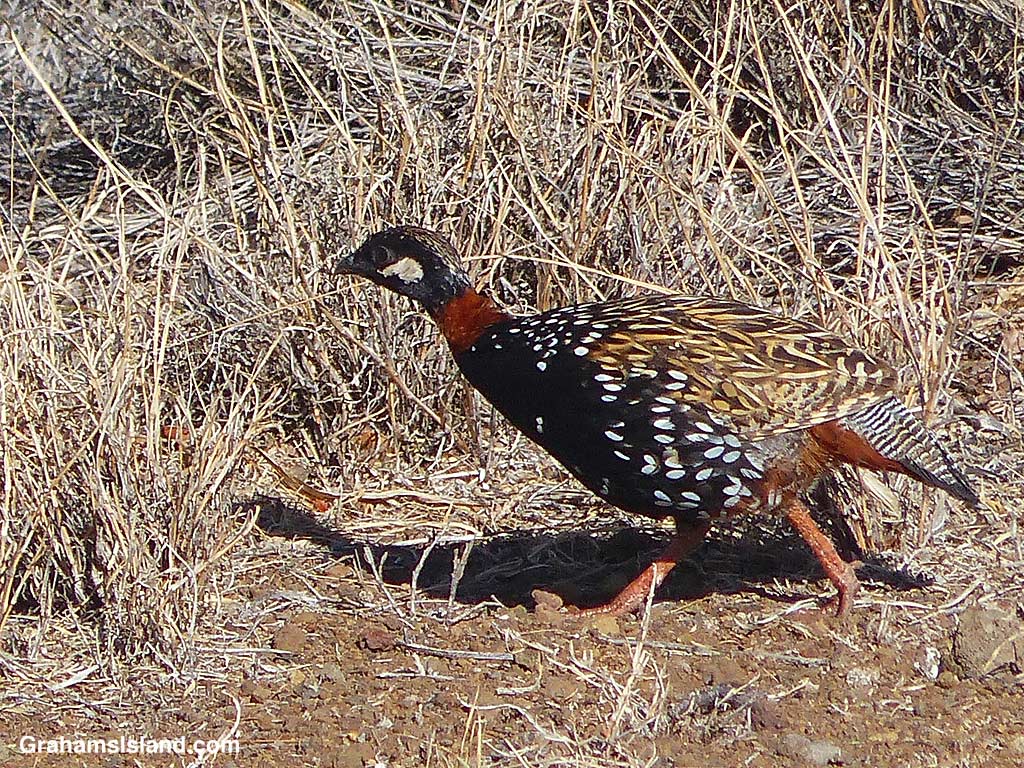
There are three kinds of francolins that can be found in Hawaii. In the 10 years I’ve lived here I’ve seen and photographed lots of Gray Francolins, the most common and loudest of the bunch. I’ve also got several photos of Erckel’s Francolins, which are noticeably larger than the other two. But though I’ve seen a fair number of Black Francolins, which have distinctive markings, I’ve never got a photo of one before.
It’s not that they’re rare – I see them fairly regularly – but I only ever seem to see them while I’m driving. By the time I stop the car, grab the camera, and get out, the francolin is long gone.
But last week, while I was at work, I looked out of the window and saw this bird ambling across what passes for a lawn here. I snagged my camera, ran outside and started taking photos. In the top one, the bird is about to leave the open area and head into scrubby grassland. It gave me the eye at a couple of points, and then headed away and out of sight. And, yes, the brown stalks are grass. This area gets very little rainfall, and it’s been exceptionally dry here as well.
There are four Grey Francolins in this photo. Two are obvious, and a third fairly clear, but I didn’t notice the fourth until I was processing the photo and looking closely at it.
I first saw this batch of francolins driving home from work. They were in the road and I stopped while the adults ran off. I was about to start moving again when I noticed a tiny lump in the road ahead. A small rock? A lump of dirt? Turned out it was a baby francolin, about three inches high. My pause allowed it to rejoin it’s parents and, tiny legs or not, that sucker could run!



















 Graham's Island