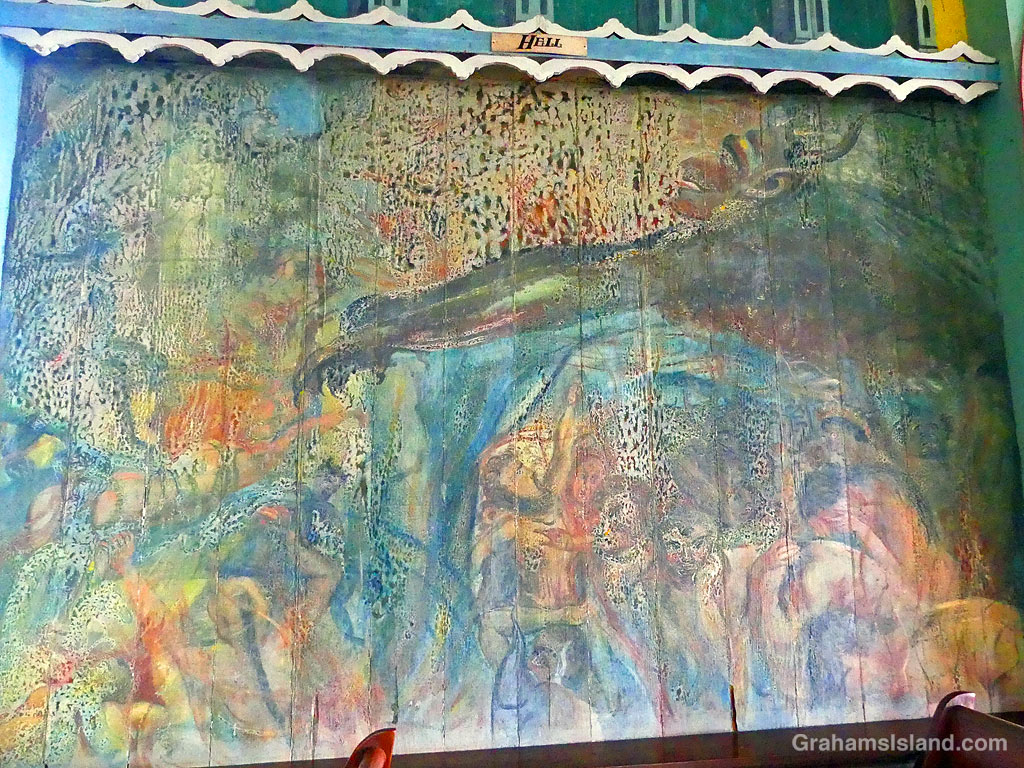
This month’s Sunday Stills Color Challenge is ‘Pastels.’ See more responses here. Well, I couldn’t resist this headline, could I? It doesn’t look quite so bad when the colors fade to a kinder, gentler shade of purgatory.
These are from St Benedict’s Painted Church, on the slopes above Kealakekua Bay. Father John Velghe moved the church from the coast to its present site in 1899. Once it was rebuilt, he painted the interior as a mini cathedral with scenes from the bible adorning the walls. The paintings have faded over the years, but are still quite striking.
This week’s Sunday Stills challenge theme is ‘Great Outdoors Month.’ See more responses here.
I did this hike, at Hawaiʻi Volcanoes National Park, quite a while ago, but for one reason or another the post never came together and then went missing in my files! This hike started from the lookout at the end of Hilina Pali Road. A few years back, I did a different hike from this starting point that almost did me in (here). This time, having learned from that experience, I stayed on top of the pali (Hawaiian for cliff). My destination was Pepeiao Cabin (pronounced ‘pay-pay-ow’), about five miles away, though the trail is the Ka’u Desert Trail, part of which I’ve hiked from the other end (here).
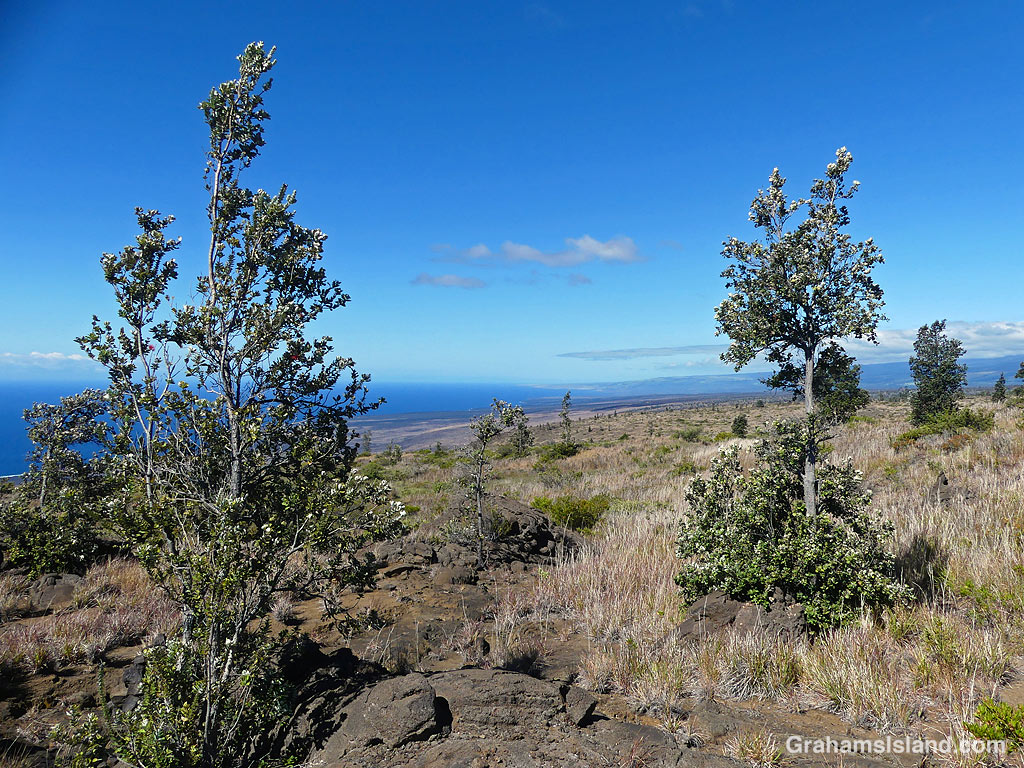
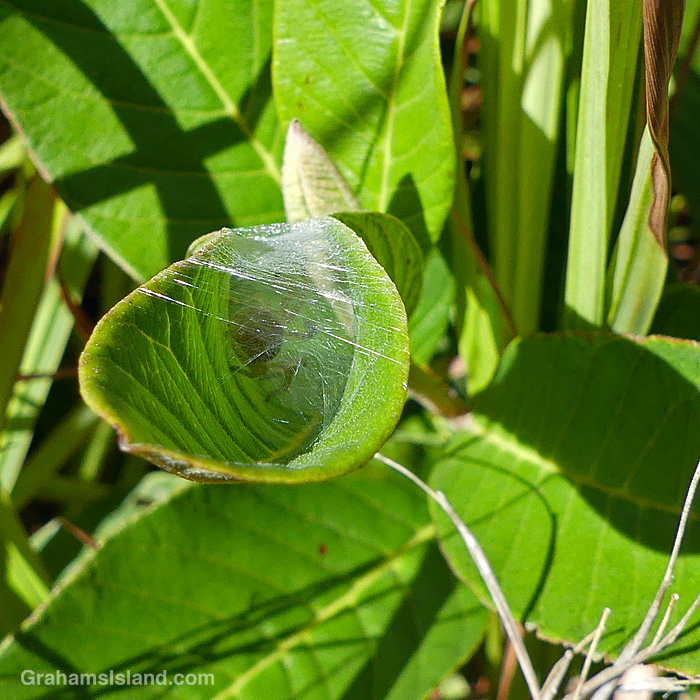
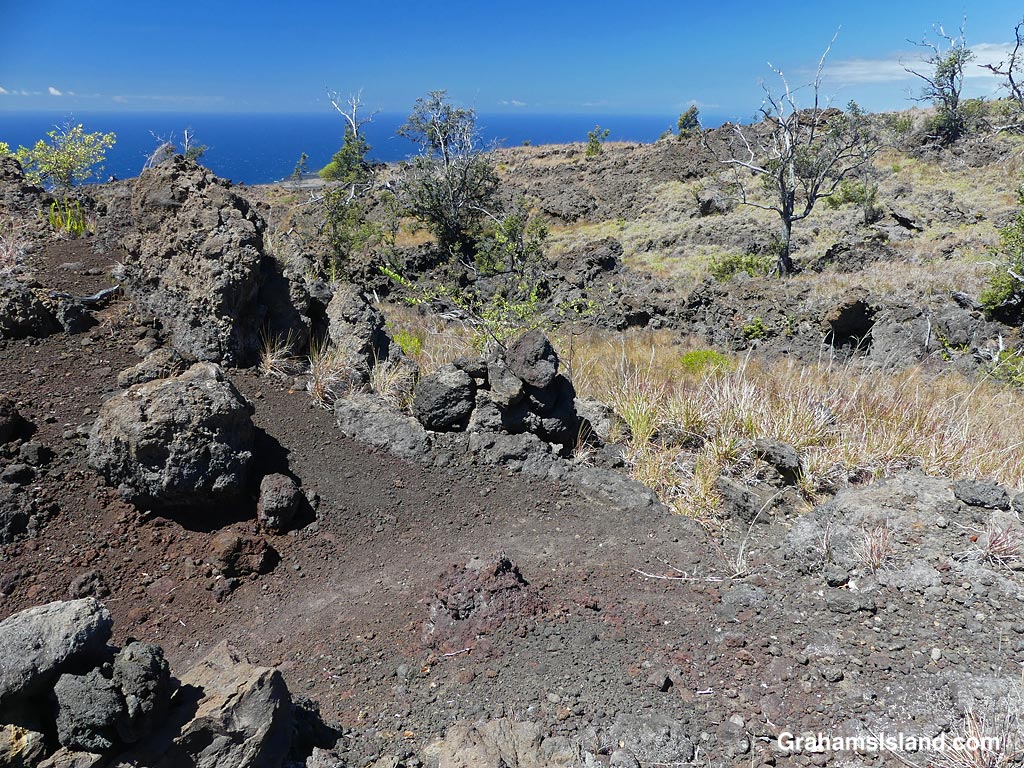
Ohia trees on the trail.A spider sheltering in a leaf.The Ka’u Desert Trail.The Ka’u Desert Trail marked by cairns.View from The Ka’u Desert Trail.
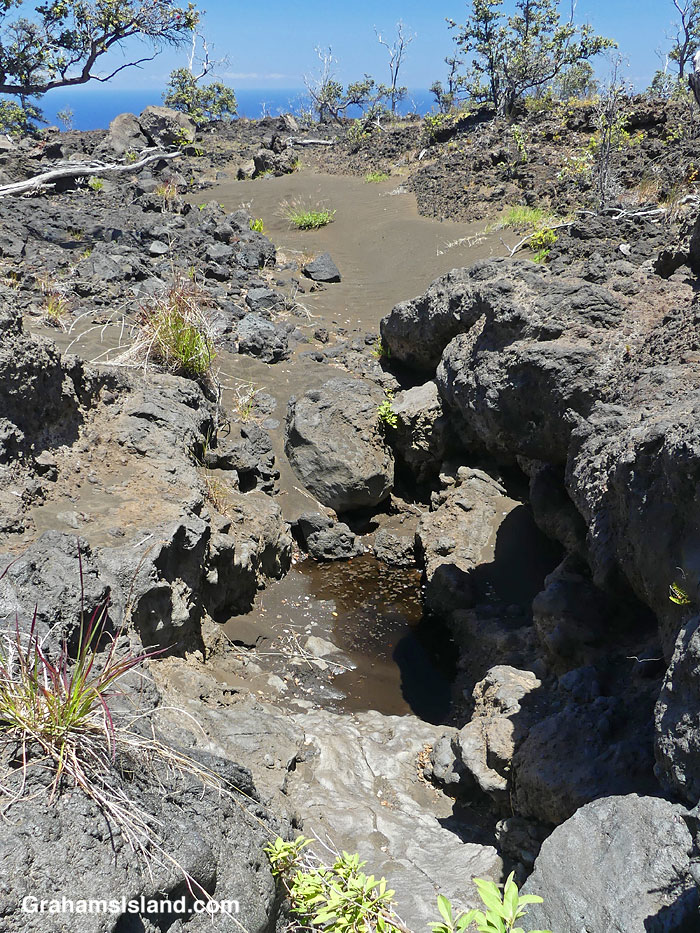
The day was sunny, but not too hot, and with a nice breeze for the most part. The elevation drop (and gain on the return) is only around 500 feet so it wasn’t too strenuous, and the trail was fairly easy to follow. It passes through grassy areas and across lava flows, and is well-marked with cairns. Ohia trees dot the landscape, along with a variety of shrubs and other flowers. I didn’t see too many birds, but there was a decent show of butterflies and bugs. The views were splendid, down to the coast or upslope towards Mauna Loa.
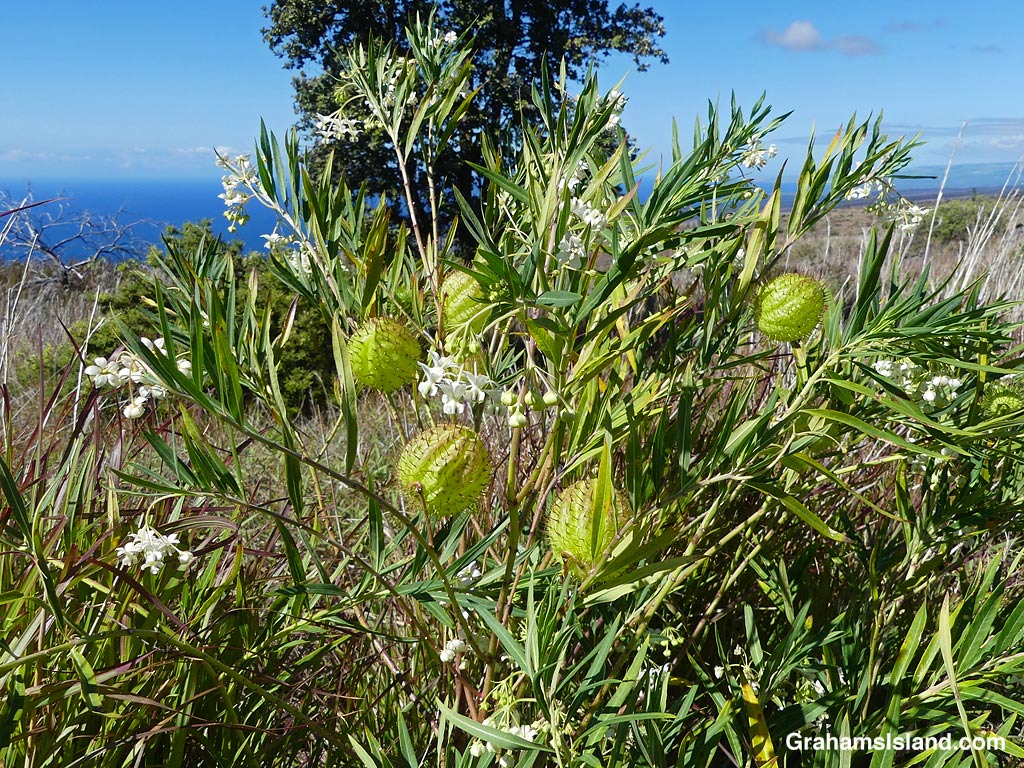
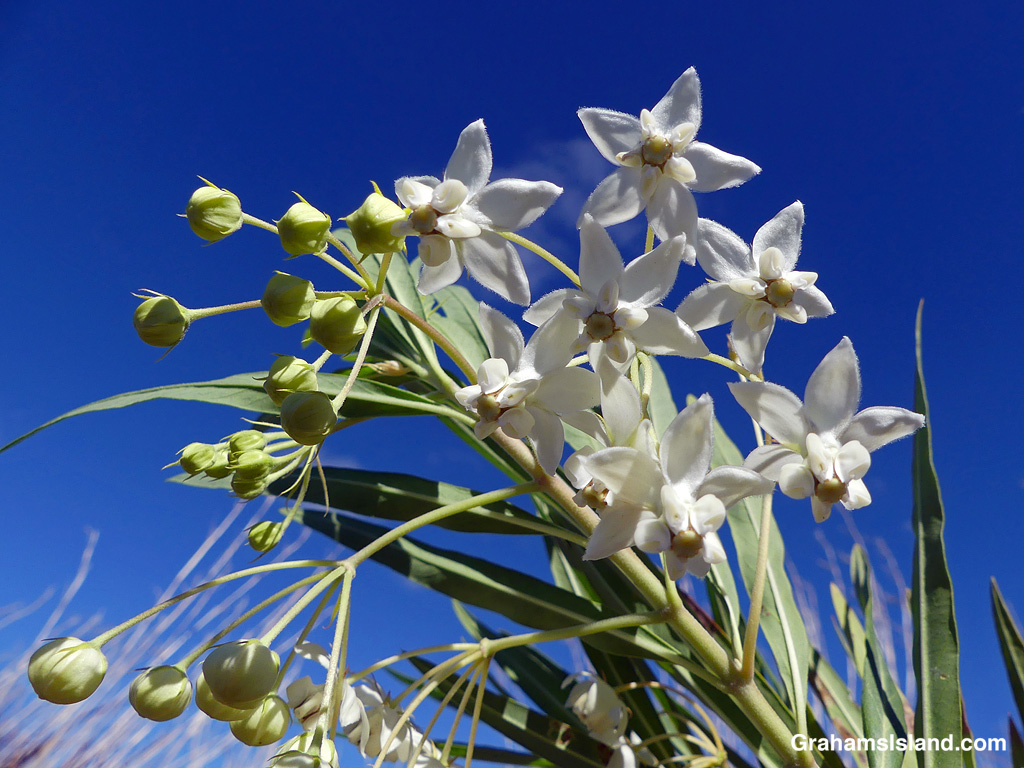
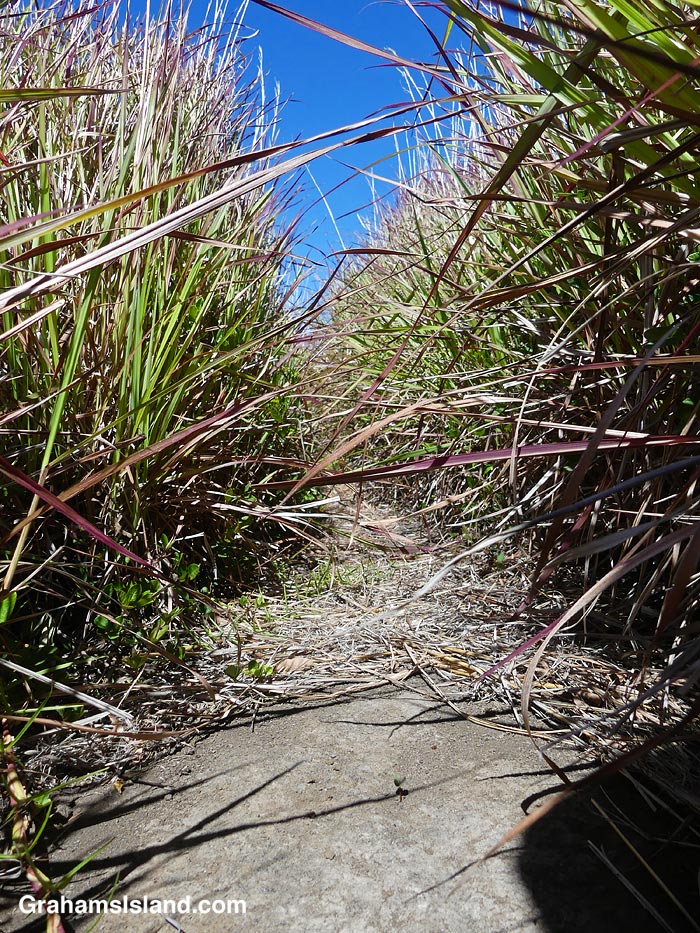
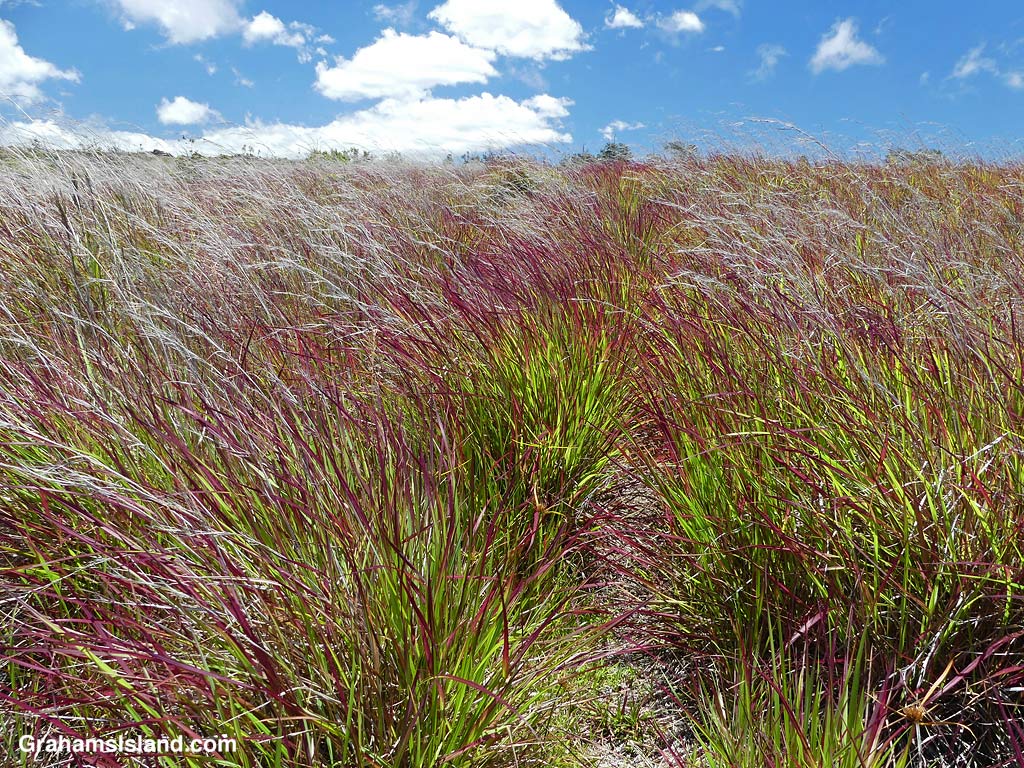
A Balloon plant on the Ka’u Desert Trail.Balloon plant flowers on the Ka’u Desert Trail.Common Guava on the Ka’u Desert Trail.Grasses alongside the Ka’u Desert Trail.Grasses alongside the Ka’u Desert Trail.
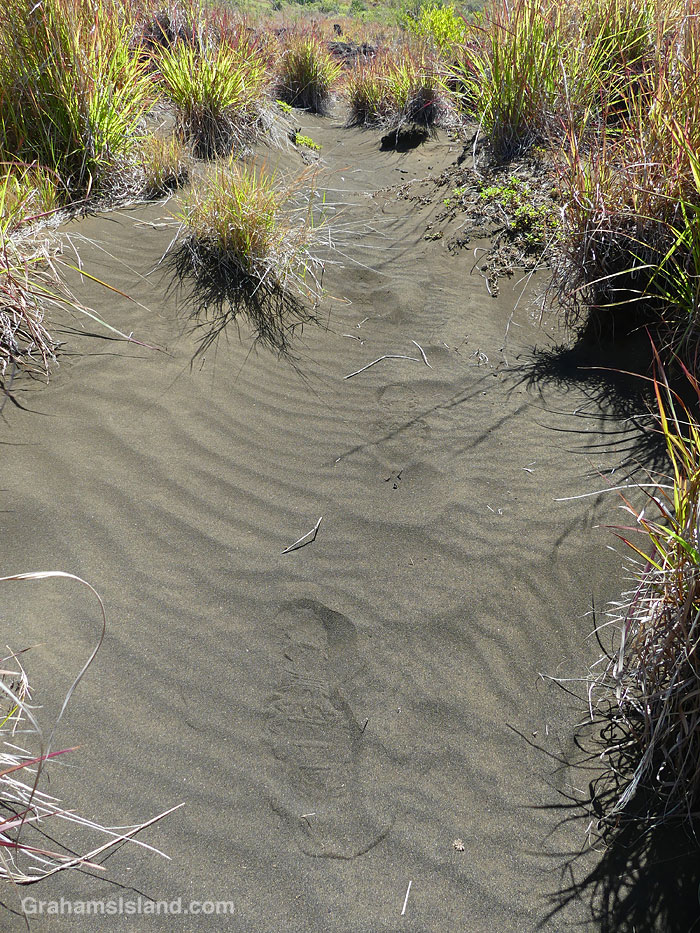
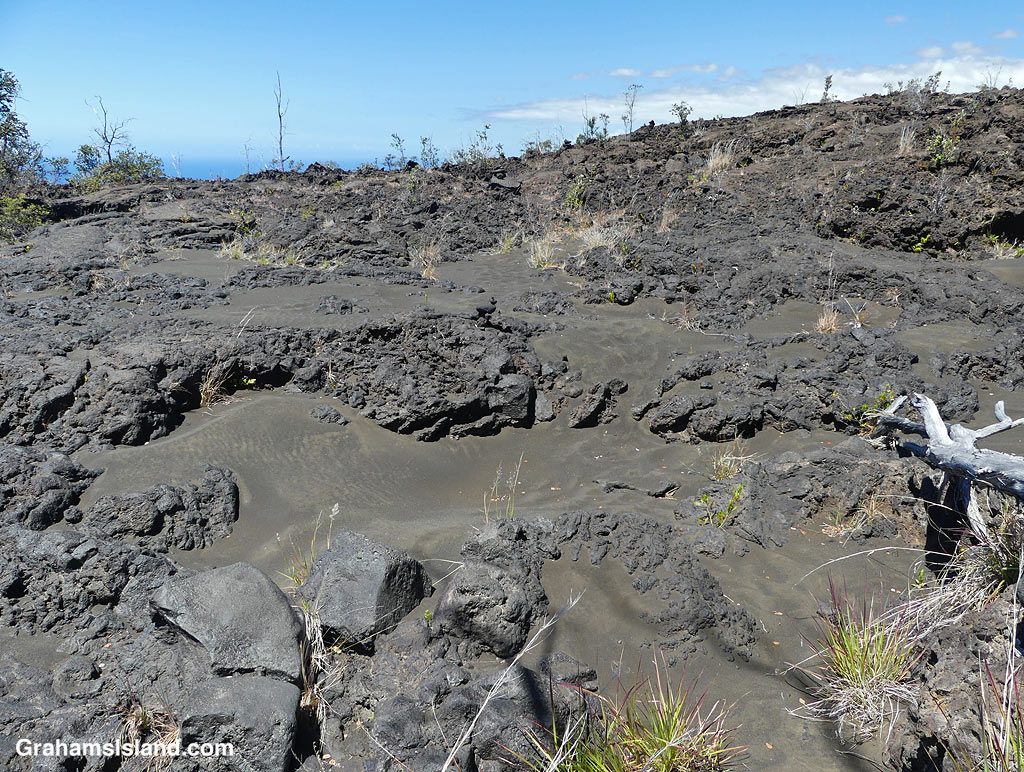
All the backcountry trails I’ve hiked in the park have featured something particularly unusual and interesting. On this hike, I was amazed by the substantial areas of sand on the trail or alongside it. This certainly didn’t get there from the beach, since the elevation is around 2,000 feet. My assumption is that it’s just volcanic rock broken down by rainfall, but just not washed down to the coast. Some of the sand was grassed over and it was like walking through dunes on the coast!
Sand on the Ka’u Desert Trail.Footprints in the sand on the Ka’u Desert Trail.Tracks in the sand on the Ka’u Desert Trail.Sand on the Ka’u Desert Trail.Sand in the lava on the Ka’u Desert Trail.
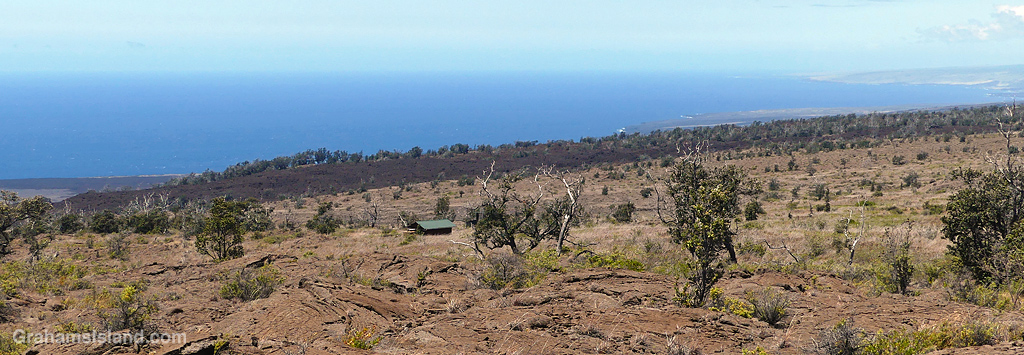
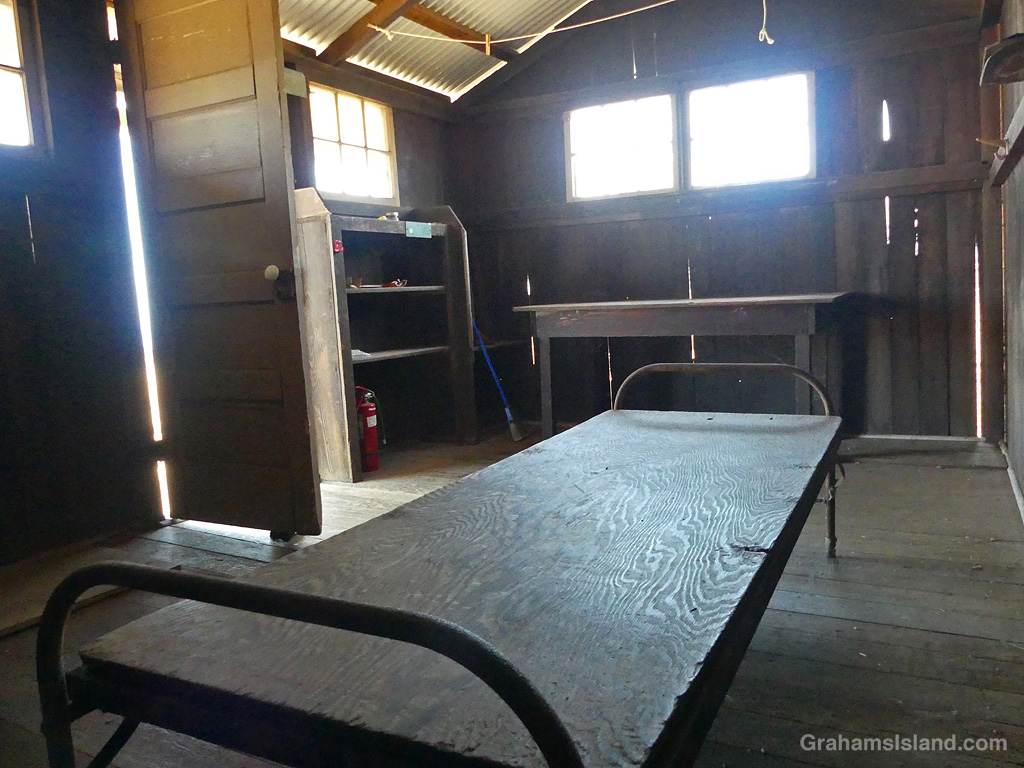
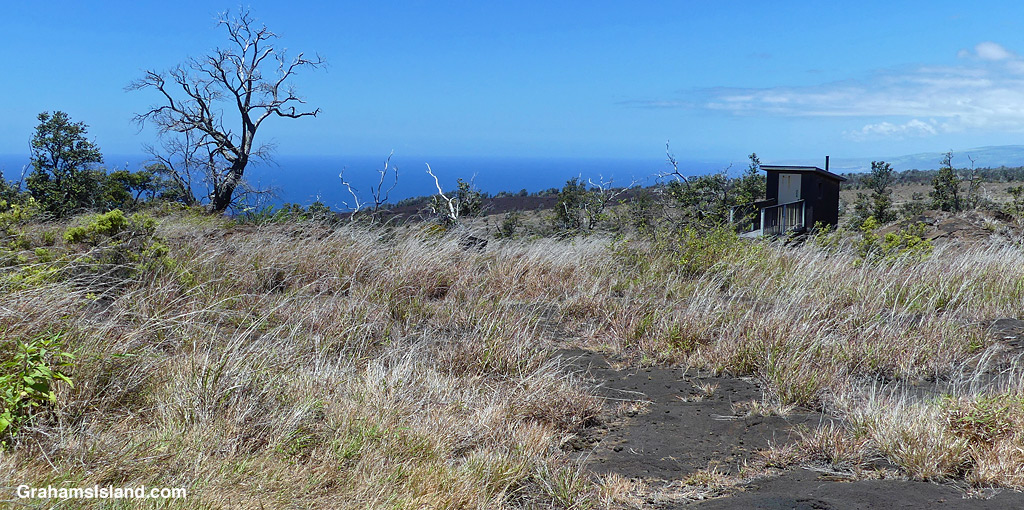
Eventually, I reached Pepeiao Cabin. There are several of these backcountry cabins in the park, and they require a permit to stay at them. This one was typically rustic, with a catchment water tank that may or may not contain water, depending on the weather and use. There’s also an outhouse with a splendid view. Inside, the cabin was basic, but the kind of place I’d be happy to stay in if it was raining outside.
Pepeiao Cabin on the Ka’u Desert Trail.Pepeiao Cabin on the Ka’u Desert Trail.The interior of Pepeiao Cabin on the Ka’u Desert Trail.The outhouse by Pepeiao Cabin on the Ka’u Desert Trail.
After I got back, I saw that the park website says “Pepeiao is in the southwestern reaches of Hawaiʻi Volcanoes National Park backcountry. The cabin is no longer safe for use and visitors should plan on tent camping.” I was a bit surprised because I’ve certainly stayed in plenty of less salubrious accommodations in my day!
Also posted for Jo’s Monday Walk. See more responses here.
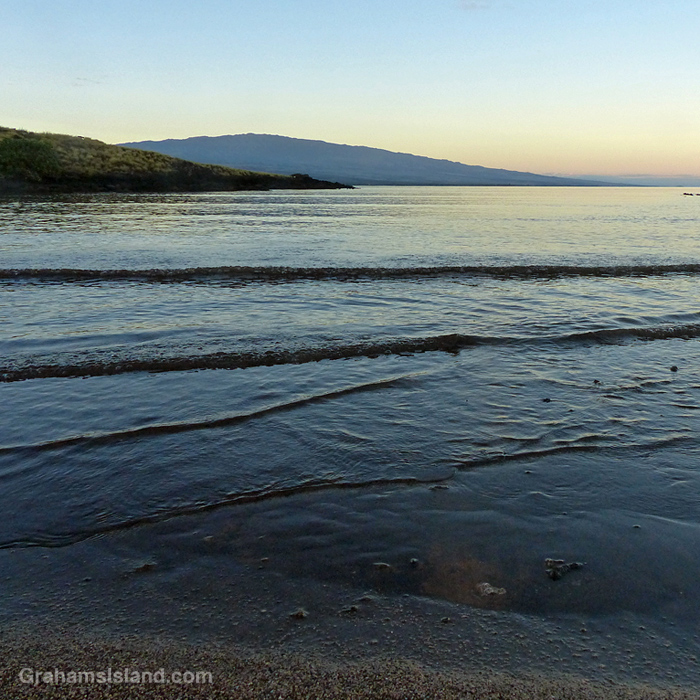
A calm morning with little wavelets and a view of Hualalai.
This week’s Sunday Stills challenge theme is ‘Water, Waterscapes and/or Water Safety.’ See more responses here. Captions on the photos.
Also posted for Becky’s Squares: Move Forward, Reconstruct, Renew, and/or are Burgeoning, because waves are always moving forward. See more responses here.
Time for a swim. Looks like a good morning for fishing too.Uh oh. Here comes a bigger wave.Best stay outside the surf line.They don’t look too big from up here.Still, the surfers will be happy.Ahhh. All is calm again.
Sunday Stills Monthly Color Challenge is ‘Cobalt Blue.’ See more responses here.
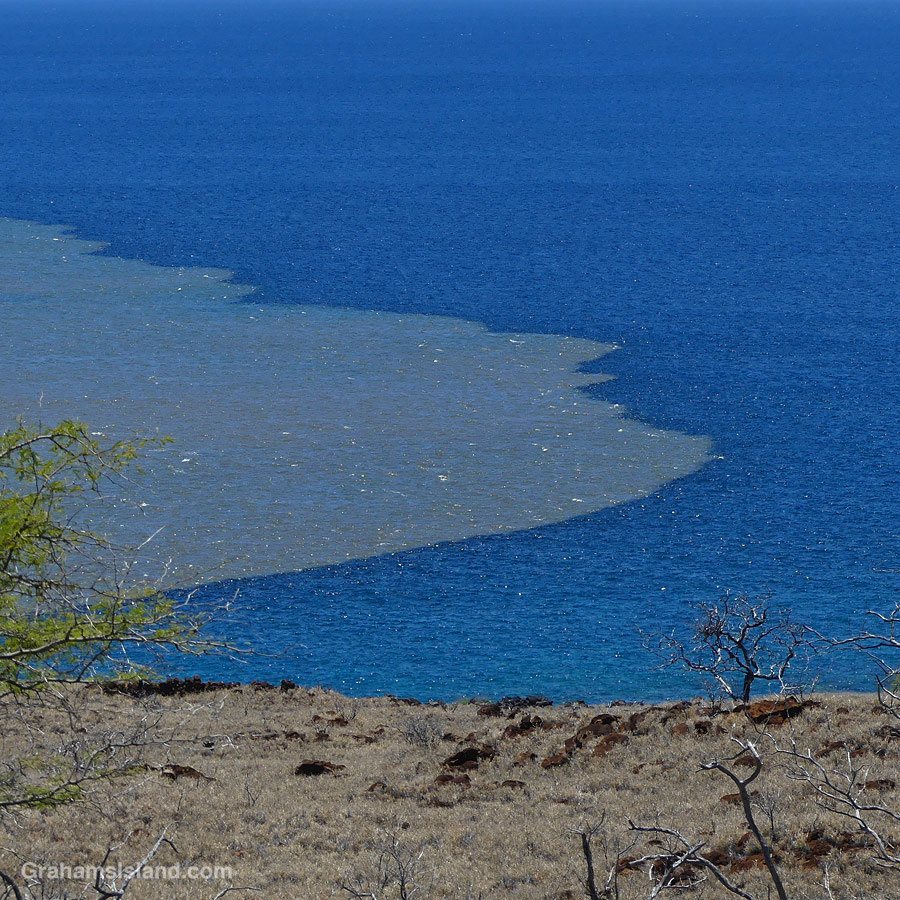
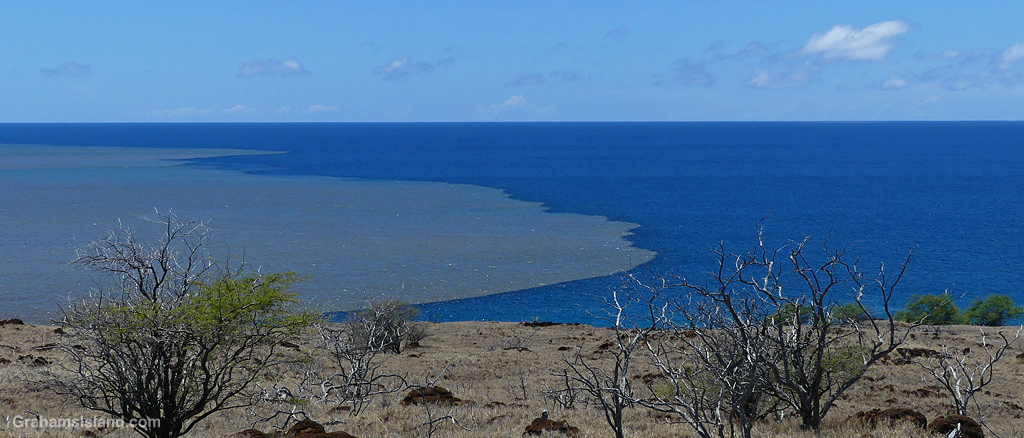
I had a post all lined up, until I was called into work yesterday to do some clean up after flash floods swept through several places, including where I work. On the drive down, I came on this scene.
The cobalt blue waters of the Pacific were being overrun by muddy waters swept into the sea by flooding. I’ve never seen such a sharp line before and, as I watched, I could see it moving forward, to the north. On that coast, the current generally runs in that direction, and a swell from the south was probably helping it along too.
The muddy waters entered the sea down by Kawaihae and when I first saw them, they’d almost reached Lapakahi, a distance of around 12 miles. When I returned home, about three hours later, the brown water had moved up off Kapaa Park, another two and a half miles north.
It will take a day or two for the ocean to clear again, as the waters mingle or are eased away by offshore currents. In the meantime, Kawaihae is digging itself out from the copious amounts of mud left behind by the floodwaters.
Also posted for Becky’s Squares: Move Forward, Reconstruct, Renew, and/or are Burgeoning. See more responses here.
This week’s Sunday Stills challenge theme is ‘Groups of Any Kind.’ See more responses here.
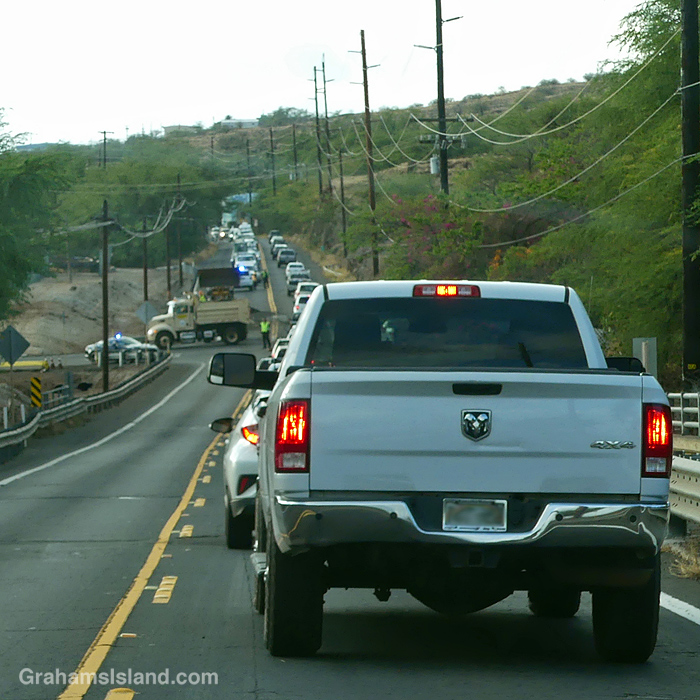
One day last week, late in the afternoon, the driver of a dump truck carrying asphalt, lost control of his vehicle on the road into Kawaihae. He careened across the road, into a guard rail, and overturned, spilling the asphalt onto the highway.
No one was hurt, but the highway was closed in both directions. This is the highway I take to go to and from work. I’d heard about the accident before I set off for home, but there were conflicting versions about whether one lane was closed or both.
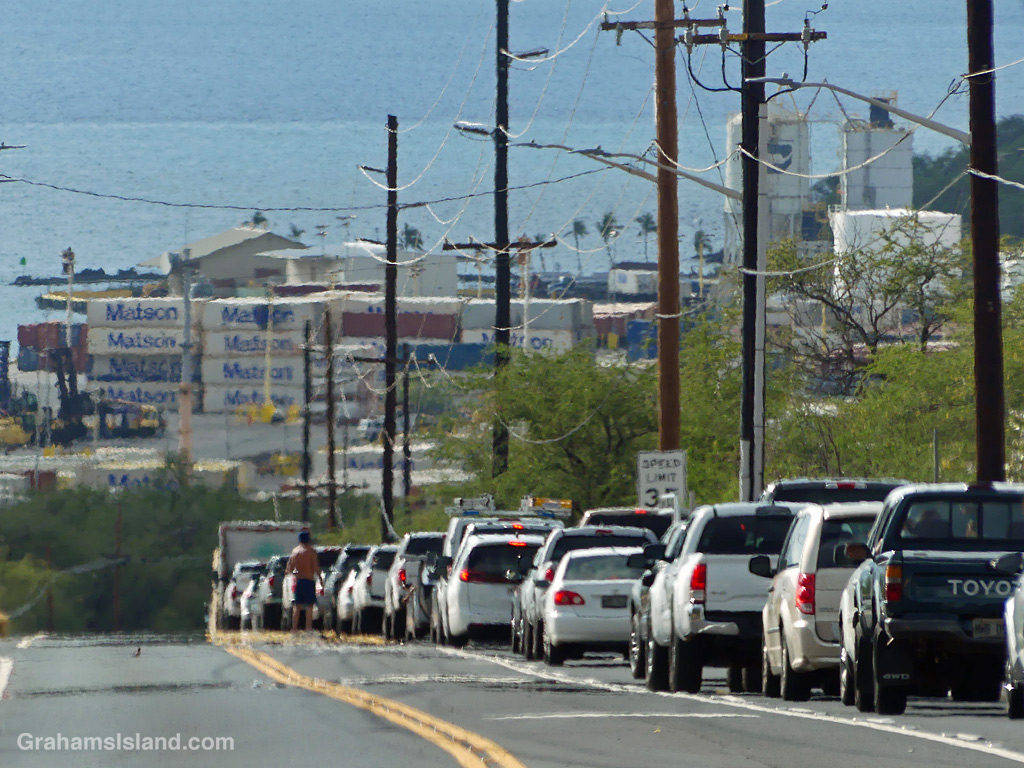
It wasn’t long before I was in a line of backed up traffic, but even then it wasn’t clear whether the highway was closed or not, since a fair number of vehicles kept coming from the opposite direction. However, the longer I was in the line, the more clear it became that these vehicles were driven by people turning around and getting out of the jam. Some of these were likely people who were headed to Kawaihae for some reason that wasn’t urgent. Others were surely those who lived up where I do who figured it would be quicker to take the long way home. I’ve done that before (here) for a brush fire, and once stuck it out for an overturned semi (here).
This time, I decided to wait it out with my group of fellow delayed travelers. It was interesting to watch what people did. Some got out of their cars and chatted. Others took the exit to Spencer Beach Park for a more relaxing wait. Still others waited, gave up, and turned around to seek alternatives. A few cars did just that only a few minutes before a retrieval vehicle with the damaged dump truck aboard, passed by. Shortly thereafter, traffic started moving through from the other side of the holdup. Then it was our turn.
The backups were quickly cleared and I got home two hours after I left work. Had I turned around as soon as I saw the backup, I might have been home in 90 minutes. My normal commute is about 30 minutes. But I wasn’t too put out. Back home, I was still able to relax with a nice glass of wine. The dump truck driver, who caused the delay, probably wishes he’d done that too. He was arrested for suspicion of driving under the influence of an intoxicant!
Also posted for Becky’s Squares: Move Forward, Reconstruct, Renew, and/or are Burgeoning. See more responses here.
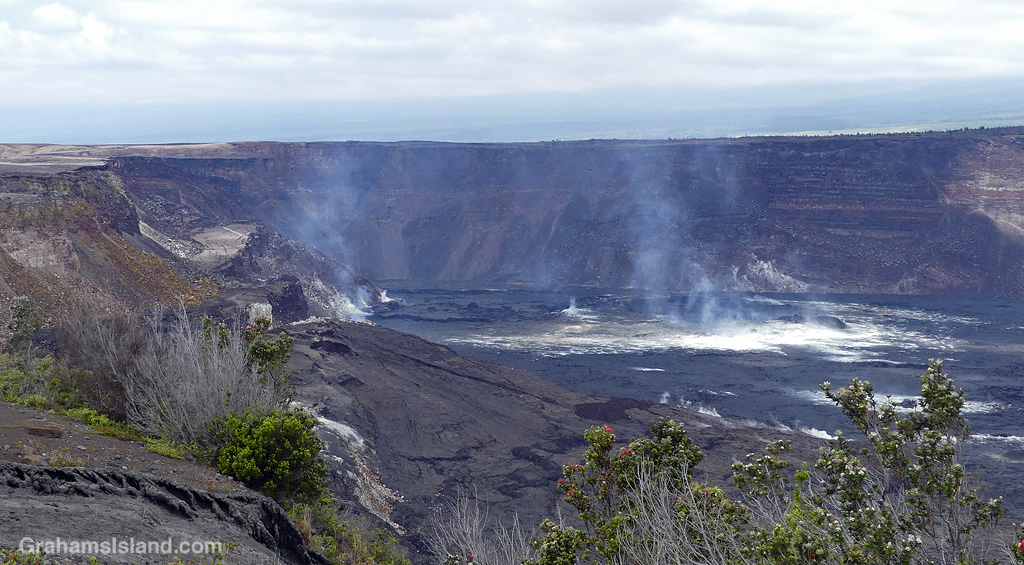
Halemaʻumaʻu crater sits within the larger Kilauea calera.
Jagger Museum sits on the center of the ridge above Halemaʻumaʻu crater. This view gives an idea of the scale.
This week’s Sunday Stills challenge theme is ‘Earth Day.’ See more responses here.
My brother has been visiting from England and, a few days ago, we went down to Hawaii Volcanoes National Park to check out the scene. The volcano’s last eruption ended in September 2023, and it’s been mostly quiet since then.
We arrived to find the volcano socked in with clouds, but the next morning the skies had lifted and we got some great views. We started at Uēkahuna, a viewing area next door to the Jaggar Museum. The viewing area used to be at the museum, but that was badly damaged during Kilauea’s 2018 eruption and is currently in the process of being removed.
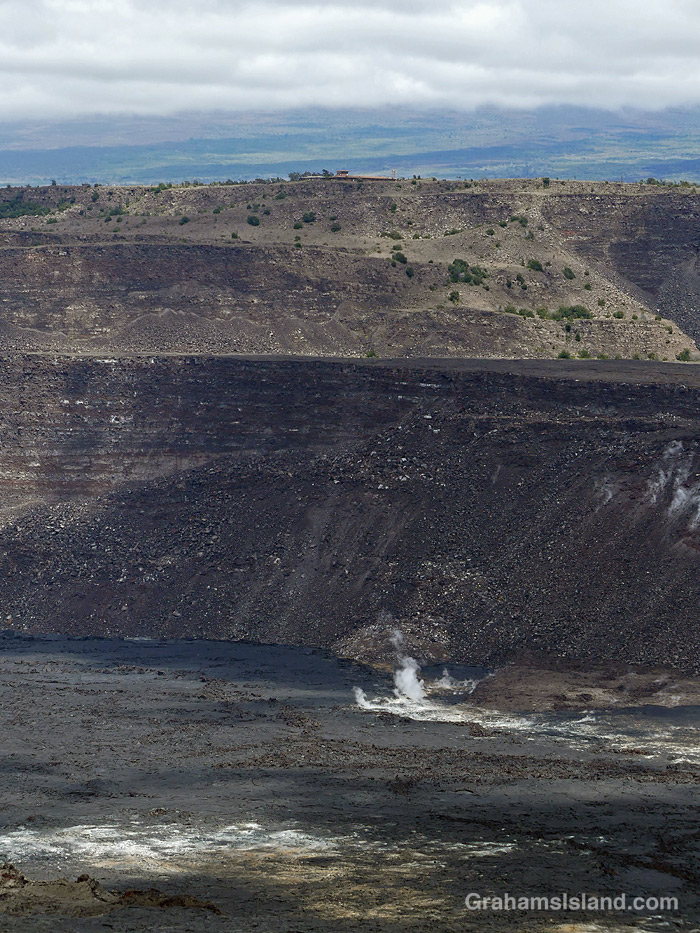
Halemaʻumaʻu crater is a pit crater within the larger Kilauea caldera. By the end of that 2018 eruption, the crater floor had collapsed into a deep pit. A small lake formed at the bottom, but that was boiled away and covered in the next eruption. Subsequent eruptions have continued this process of filling the collapsed pit. I hadn’t been down to view this area for quite a while and I was surprised at how much had been filled in. The whole floor was easily visible from the many viewpoints around the caldera, and while there’s no active lava to be seen, there’s plenty of steam rising.
Volcanic cones, from the last eruption, on the floor of the crater.
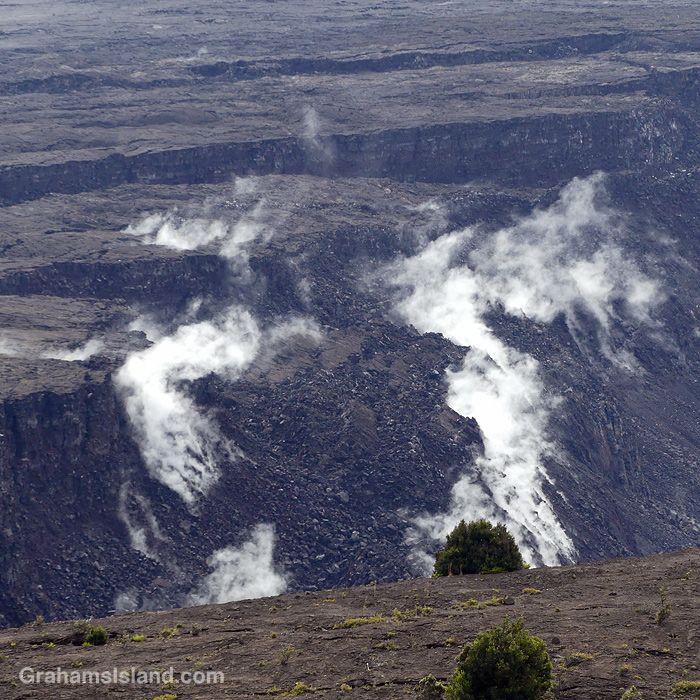
Steam rises from cracks in the walls of Halemaʻumaʻu crater.
Ironically, yesterday I got an email from the U.S. Geological Survey announcing that ‘Increased seismicity over the past three weeks, indicates heightened activity. Updates will be provided daily while at a heightened state of unrest.’ In other words, watch this space!
For more information about Hawaii Volcanoes National Park, go to nps.gov/havo/.
A view of Halemaʻumaʻu crater. On the left, the flat area with a white line on it, is a section of Crater Rim Drive that slid, intact, into the crater!
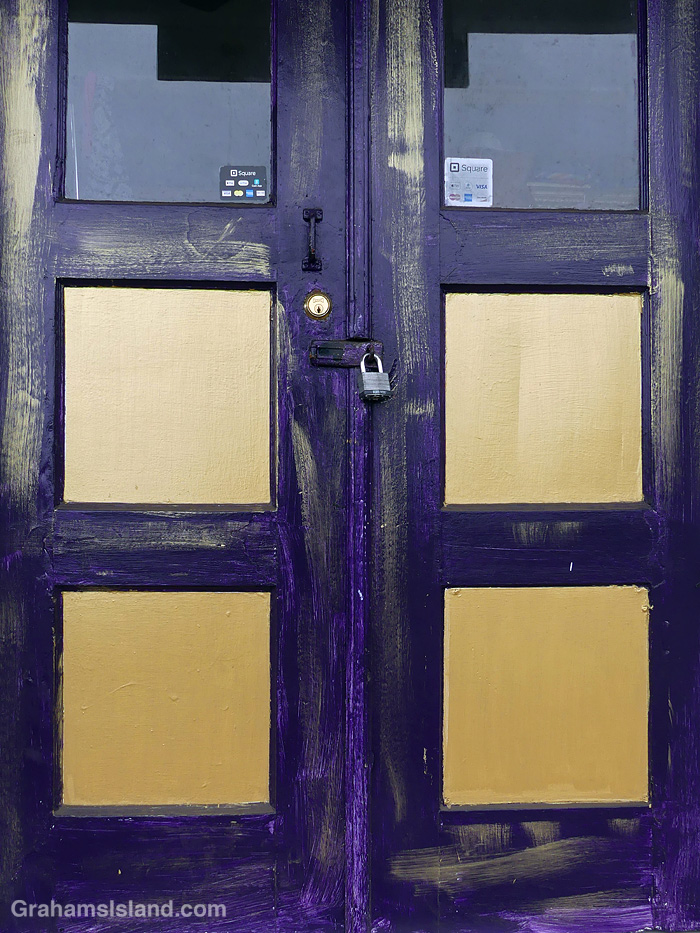
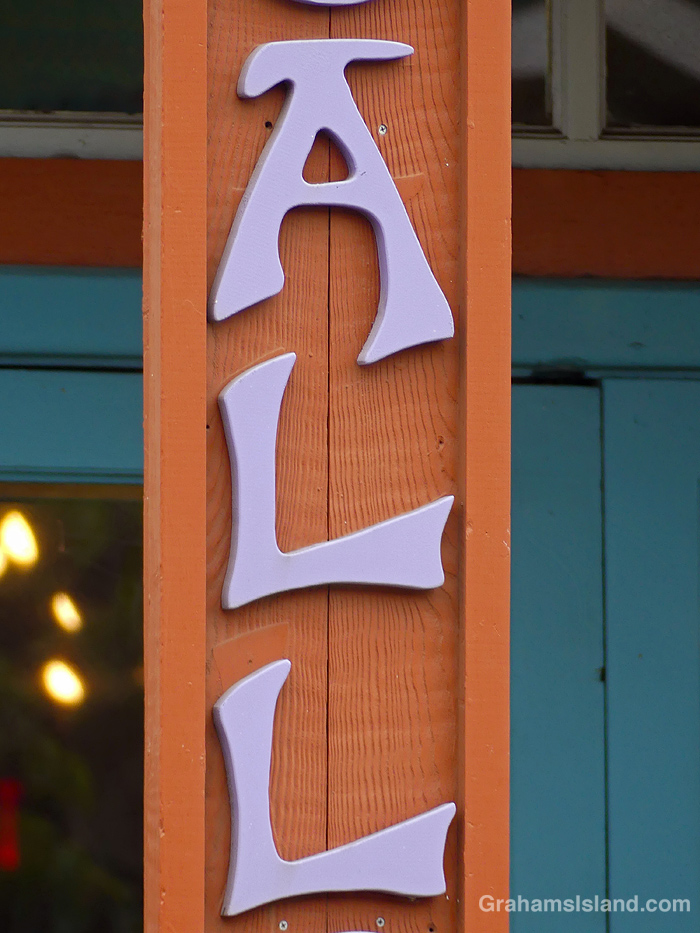
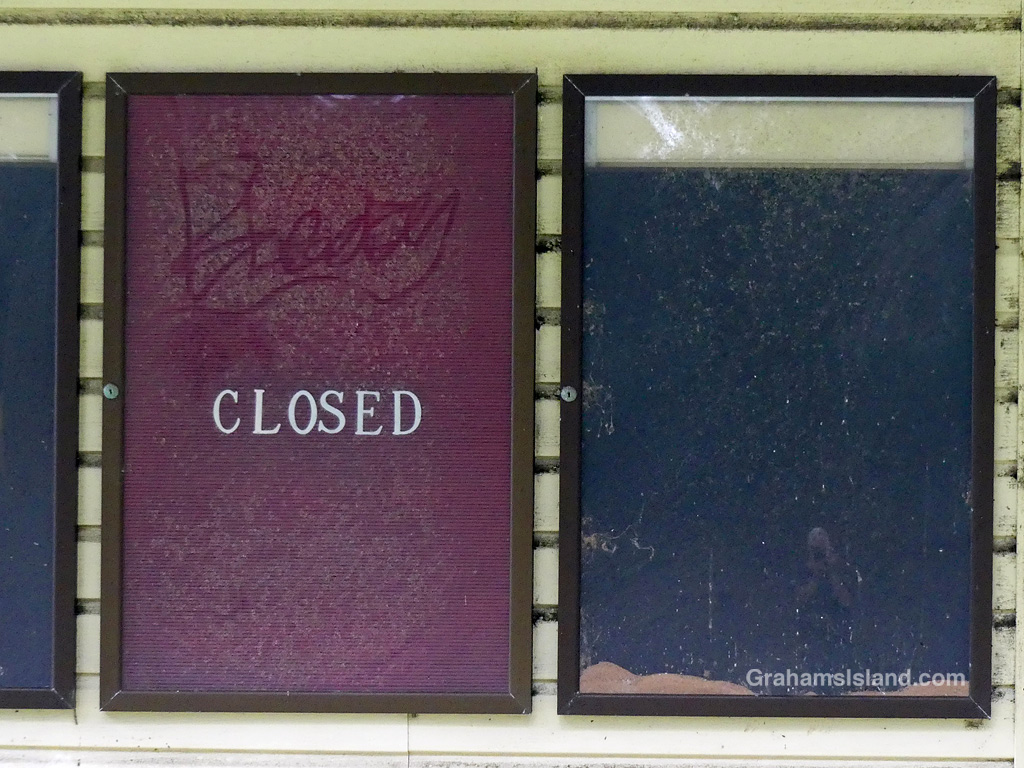
This week’s Sunday Stills monthly color challenge is ‘Diamond, Quartz, Crystal and/or Purple.’ See more responses here. I’m going with purple because I have nothing for the others! I was going to do another flower array, but then I had a wander around beautiful downtown Hawi and came up with these photos.
A water dispenser in Hawi.A screen at the Hub in Hawi.The door of a store in Hawi.Part of a sign in front of a building. Can you figure out what the full sign says?A sign at the front of an old theater in Hawi.
















 Graham's Island