
I found this scene on a recent walk. Somewhere a child is crying.
Posted in response to this month’s Becky’s Squares challenge theme of ‘Odd.’ See more responses here.

I found this scene on a recent walk. Somewhere a child is crying.
Posted in response to this month’s Becky’s Squares challenge theme of ‘Odd.’ See more responses here.
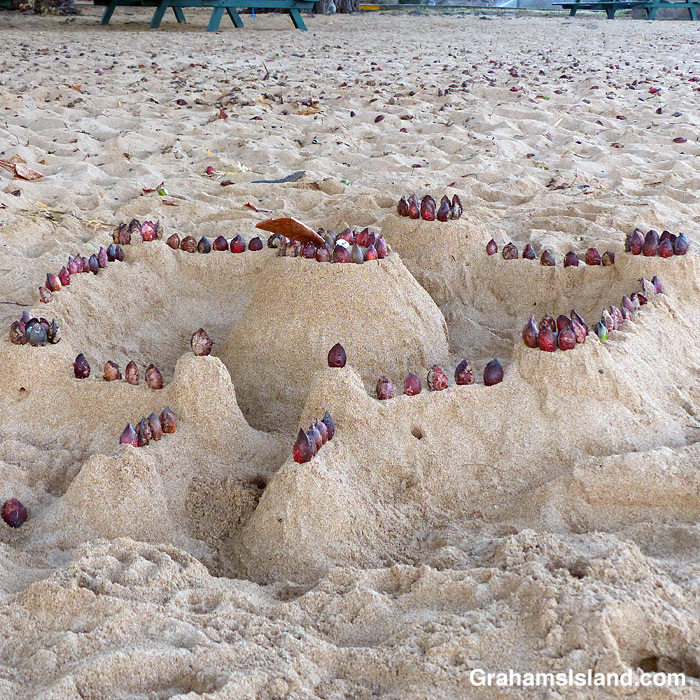


False Kamani (Terminalia catappa) is believed to have been introduced to Hawaii before 1800 and is now widespread here, particularly on beaches and shorelines. This one was at Spencer Beach Park and was heavy with green almond-shaped fruits as well as riper deep pink ones.
What caught my eye was that the ripe fruits had been gathered and used to ornament the battlements of a sandcastle below the tree. I thought they gave it an odd but distinctive look.
Posted in response to this month’s Becky’s Squares challenge theme of ‘Odd.’ see more responses here.
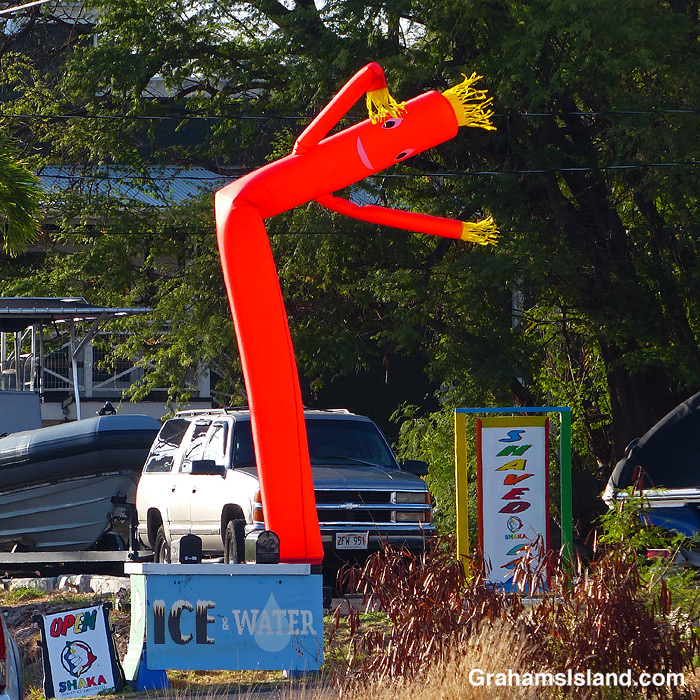
Had I been a little quicker on the uptake, I’d have run this photo the day after this post. I found this attention seeker in Kawaihae, hoping to lure passers-by to stop for ice, water, and shaved ice. He’s always smiling and he’s got eye-catching dance moves, too!
Posted in response to this month’s Becky’s Squares challenge theme of ‘Odd.’ See more responses here.

I have to admit I have no idea what the attraction is to knotting a pair of shoes together and lobbing them over phone or power lines. I saw this pair on Old Saddle Road, which is basically in the middle of nowhere. Mind you, I can see why a person would want to get rid of these shoes!
Posted in response to this month’s Becky’s Squares challenge theme of ‘Odd.’ See more responses here.

I encountered this grasshopper while walking at Puʻukoholā Heiau National Historic Site at Kawaihae. As I approached, the grasshopper held its ground and I immediately thought of the Black Knight in Monty Python’s Holy Grail movie. Unlike the Black Knight, this grasshopper finally pinged off to the side and let me pass, all it’s limbs still intact!
Posted in response to this month’s Becky’s Squares challenge theme of ‘Odd.’ See more responses here.
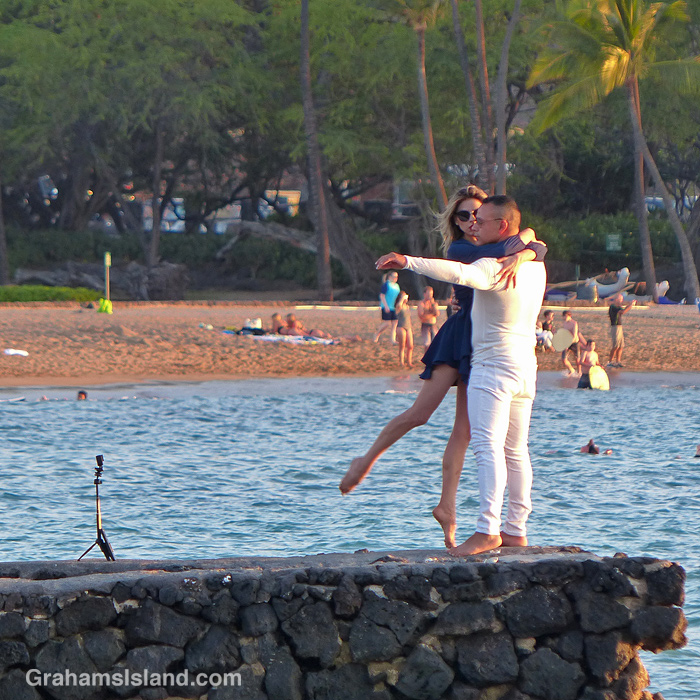
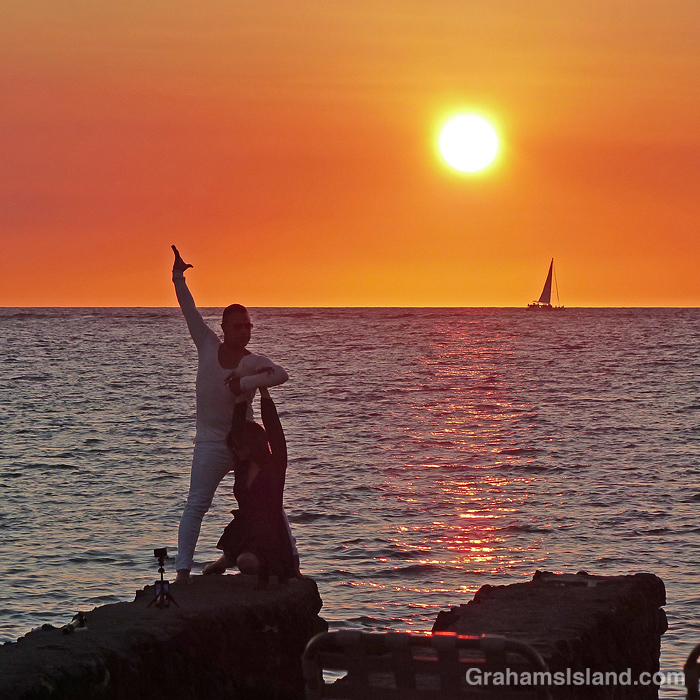
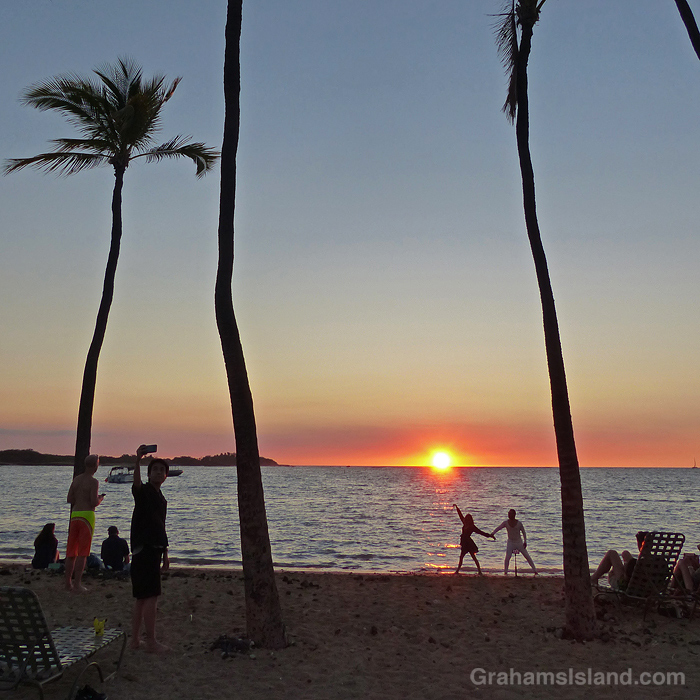
I don’t often take photos of people, but this couple, on the shore at ʻAnaehoʻomalu Bay, caught my eye, as they did of pretty much everyone else at the beach at that time. It would have been hard to miss them.
They started out on the end of a rock wall that juts out from the beach, putting them squarely in everyone’s line of sight. Then, after I’d moved on, they moved on too and ended up squarely in my photos of the actual sunset.
The reason for their odd behavior can be seen in the photos – that little tripod with the camera on top. They were videoing themselves, of course. They’re probably highly paid influencers, social media stars, or well known edgy artists. I don’t know, being ignorant of all those things, but since they were performing on a public beach, I had no qualms about taking photos. I wish them well and I was smiling through the the whole thing. I noticed other people were, too.
If these had been photos of me and my wife, you would know that we are very close to the end of times. It’s hard for me to imagine a less likely scenario. Which is probably why I labeled the photos ‘Sunset poser couple.”
Posted in response to this month’s Becky’s Squares challenge theme of ‘Odd.’ See more responses here.

A sailboat framed by driftwood on the Kohala coast.

This week’s Sunday Stills challenge theme is ‘Power of the Elements.’ See more responses here.
For the past couple of weeks or more, we’ve had a series of sizable WNW swells reaching the Big Island. What this has meant is lousy snorkeling conditions on the west side of the island and a surge in calling in sick to work amongst surfers.
The photos below show surf from one of these swells crashing ashore along the North Kohala coast. The first of these photos was taken from the parking lot of one of the parks there. In the bottom corner of this area is a metal boat hoist and concrete barriers blocking access to the corner of the lot, where it’s no longer safe to park. When big swells wash over the lot, these big concrete barriers get pushed around, such is the power or the surf.
The top photo is from a previous event of this kind several years ago, which dwarfed the recent swells. This particular swell not only washed over the entire parking lot, but also engulfed the boat hoist, swallowing it from sight. As the water receded, two portable toilets in a recess near the top of the lot, started sliding down the lot towards the water. Luckily, some people watching from nearby were able to corral them before they fell over or were washed into the bay. The boat hoist wasn’t as fortunate. After the waves subsided, it was discovered that these powerful waves had twisted the metal frame of the hoist, rendering it unsafe for use. It was several months before repairs made it usable again.


